- Joined
- 20/7/24
- Bài viết
- 3,905
- Reaction score
- 0
- Points
- 36
Charles-Émile Jacque – Rural Realist Painter and Master of the Barbizon School
Charles-Émile Jacque was born in 1813 in Paris and stands as one of the important figures of nineteenth-century French realism, as well as a key representative of the Barbizon School. Initially trained as an engraver, Jacque began his career in illustration and printmaking before turning fully to painting. His strong foundation in etching and graphic arts profoundly shaped his visual thinking, influencing his treatment of form, structure, and composition in oil painting.
In the 1840s, Jacque settled in Barbizon, where a community of artists was forming around the direct observation of nature and rural life. There, he became part of the Barbizon movement, widely regarded as an important precursor to realism and later to Impressionism. At a time when many of his contemporaries still pursued historical or mythological subjects, Jacque turned instead toward the quiet realities of the countryside, making agricultural labor and pastoral landscape central to his artistic practice.
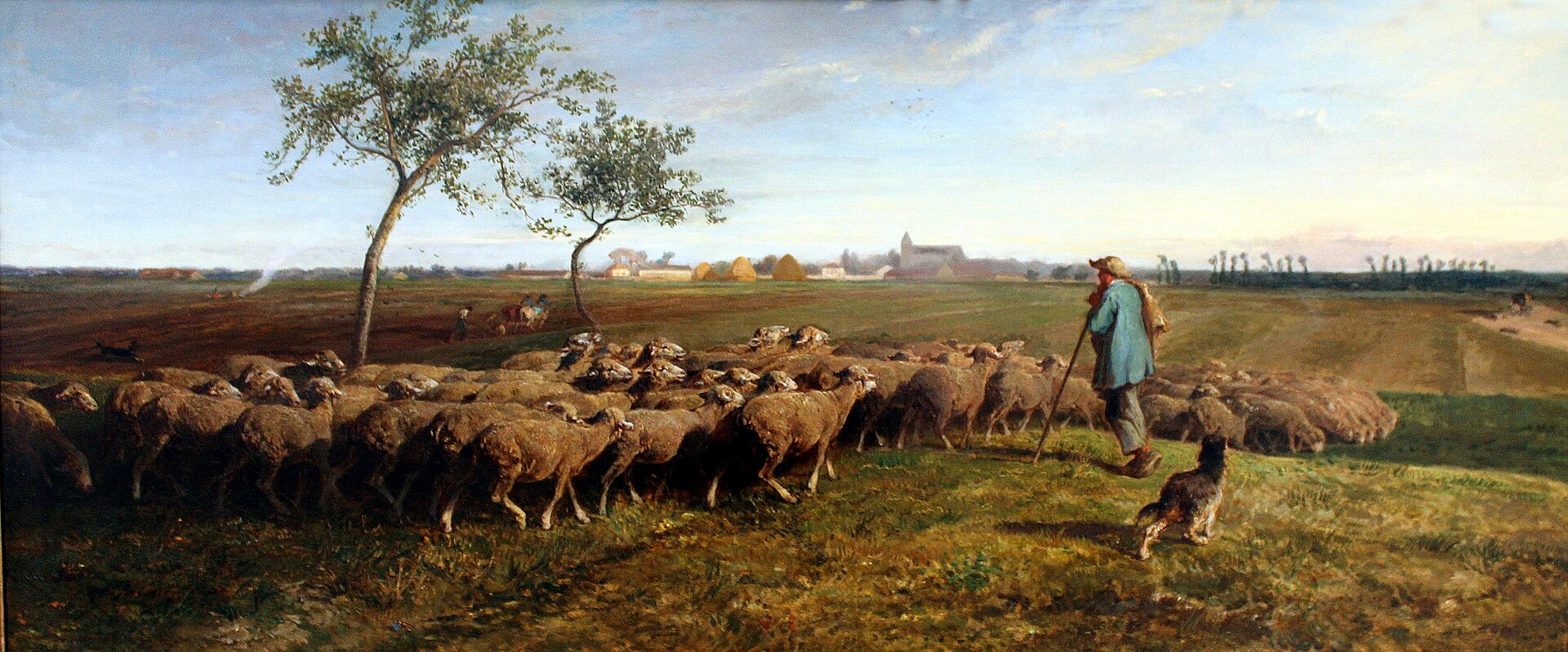
Charles-Émile Jacque’s work is distinguished by scenes of farmyards, flocks of sheep, barns, and simple agricultural structures set within expansive open land. Animals, particularly sheep, occupy a central role in many of his compositions and are rendered with remarkable precision. In Jacque’s paintings, animal bodies possess solidity, weight, and an almost sculptural presence. Working primarily in oil on canvas, he constructed compositions through strong horizontal structures and grounded perspective, creating a sense of stability and deep connection to the land.
Light in Jacque’s paintings is natural, even, and undramatic, used to reveal the textures of wool, wood, soil, and the rough surfaces of rural life. This restraint gives his work a quality of stillness, endurance, and authenticity. His paintings do not idealize the countryside, but rather record it as a living structure of labor, environment, and natural order.
Alongside painting, Jacque was also a prolific printmaker, producing a large body of detailed etchings that circulated widely in mid-nineteenth-century France. These prints strengthened his reputation as a multidisciplinary artist and demonstrate the close relationship between graphic thinking and painterly construction in his work. He exhibited regularly at the Paris Salon, where he gained recognition for both painting and printmaking.
One of Charles-Émile Jacque’s major contributions was elevating rural and pastoral subjects to the status of serious academic art. He did not regard the countryside as a secondary theme, but as a subject of profound aesthetic and social inquiry. In doing so, he helped transform perceptions of landscape and labor within nineteenth-century painting.
Charles-Émile Jacque died in 1894, leaving behind a sustained artistic legacy documenting land, labor, and pastoral structure with precision, consistency, and human depth. He continues to be recognized as one of the defining figures of the Barbizon School and an important bridge between realism and the major transformations of modern European painting.
See more here
Charles-Émile Jacque was born in 1813 in Paris and stands as one of the important figures of nineteenth-century French realism, as well as a key representative of the Barbizon School. Initially trained as an engraver, Jacque began his career in illustration and printmaking before turning fully to painting. His strong foundation in etching and graphic arts profoundly shaped his visual thinking, influencing his treatment of form, structure, and composition in oil painting.
In the 1840s, Jacque settled in Barbizon, where a community of artists was forming around the direct observation of nature and rural life. There, he became part of the Barbizon movement, widely regarded as an important precursor to realism and later to Impressionism. At a time when many of his contemporaries still pursued historical or mythological subjects, Jacque turned instead toward the quiet realities of the countryside, making agricultural labor and pastoral landscape central to his artistic practice.
Charles-Émile Jacque’s work is distinguished by scenes of farmyards, flocks of sheep, barns, and simple agricultural structures set within expansive open land. Animals, particularly sheep, occupy a central role in many of his compositions and are rendered with remarkable precision. In Jacque’s paintings, animal bodies possess solidity, weight, and an almost sculptural presence. Working primarily in oil on canvas, he constructed compositions through strong horizontal structures and grounded perspective, creating a sense of stability and deep connection to the land.
Light in Jacque’s paintings is natural, even, and undramatic, used to reveal the textures of wool, wood, soil, and the rough surfaces of rural life. This restraint gives his work a quality of stillness, endurance, and authenticity. His paintings do not idealize the countryside, but rather record it as a living structure of labor, environment, and natural order.
Alongside painting, Jacque was also a prolific printmaker, producing a large body of detailed etchings that circulated widely in mid-nineteenth-century France. These prints strengthened his reputation as a multidisciplinary artist and demonstrate the close relationship between graphic thinking and painterly construction in his work. He exhibited regularly at the Paris Salon, where he gained recognition for both painting and printmaking.
One of Charles-Émile Jacque’s major contributions was elevating rural and pastoral subjects to the status of serious academic art. He did not regard the countryside as a secondary theme, but as a subject of profound aesthetic and social inquiry. In doing so, he helped transform perceptions of landscape and labor within nineteenth-century painting.
Charles-Émile Jacque died in 1894, leaving behind a sustained artistic legacy documenting land, labor, and pastoral structure with precision, consistency, and human depth. He continues to be recognized as one of the defining figures of the Barbizon School and an important bridge between realism and the major transformations of modern European painting.
See more here