- Joined
- 20/7/24
- Bài viết
- 3,896
- Reaction score
- 0
- Points
- 36
José Moreno Carbonero - A Master of Spanish Historical Painting in the Nineteenth Century
José Moreno Carbonero (March 28, 1860 - April 15, 1942) is regarded as one of the last great Spanish history painters of the nineteenth century. He was also a celebrated portrait painter who enjoyed the patronage of high society in Madrid. Beyond historical painting, Moreno Carbonero produced genre scenes, landscapes, vedutas, and still lifes, demonstrating both a wide artistic range and a highly accomplished technical foundation.
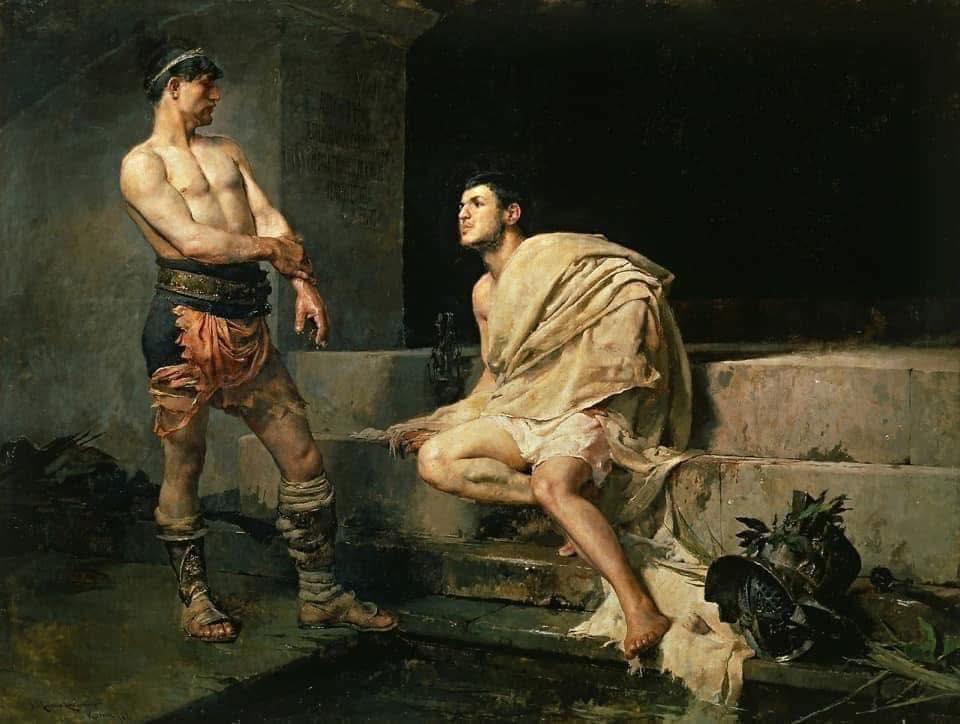
Born during a period when European academic art still held dominant influence, José Moreno Carbonero distinguished himself early through his strong academic discipline, particularly in precise draftsmanship, clarity of line, and refined brushwork. Throughout his career, he developed a significant body of work in history painting, a genre demanding not only technical mastery but also extensive knowledge of historical context, costume, character psychology, and narrative construction.
A defining characteristic of Moreno Carbonero’s art lies in his approach to history. Rather than focusing primarily on grandiose moments or epic military triumphs, he often directed attention toward the emotions, reactions, and psychological depth of individuals caught within historical events. This approach was shaped in part by the small-format genre painting he practiced in his early years, where narrative intimacy and everyday human experience were central concerns. As a result, his historical works possess a strong humanistic dimension, distinguishing them from many contemporaries whose history paintings leaned more toward spectacle or ideological dramatization.
One of the most remarkable aspects of his practice was his extraordinary commitment to historical accuracy. For Moreno Carbonero, history painting was not merely artistic interpretation but also a form of reconstructing collective memory. This is particularly evident in his painting of the founding of Buenos Aires, commonly known as The Founding of Buenos Aires. After delivering the work to the city government in 1909, he continued researching the historical record and concluded that substantial revisions were necessary to improve its accuracy. He requested that the painting be returned, reworked it extensively, and only returned the revised version to the city in 1924. This episode remains a notable event in art history, illustrating the rare seriousness with which he regarded the historical responsibility of artistic creation.
In addition to historical painting, Moreno Carbonero achieved considerable success as a portrait painter, particularly among the Spanish aristocracy and cultural elite. His portraits are distinguished by their dignity, refinement, and ability to combine realism with psychological insight. These works further reinforced his standing as a highly patronized artist within the artistic milieu of Madrid in the late nineteenth and early twentieth centuries.
The legacy of José Moreno Carbonero resides not only in his paintings but also in his role during a transitional period in Spanish art, when academic traditions gradually gave way to modern tendencies. He is recognized as one of the last major representatives of classical historical painting, while also bringing an unusual depth of emotional sensitivity and rigorous historical research to the genre. For this reason, José Moreno Carbonero continues to be acknowledged as a significant figure in the history of Spanish and European art.
See more here
José Moreno Carbonero (March 28, 1860 - April 15, 1942) is regarded as one of the last great Spanish history painters of the nineteenth century. He was also a celebrated portrait painter who enjoyed the patronage of high society in Madrid. Beyond historical painting, Moreno Carbonero produced genre scenes, landscapes, vedutas, and still lifes, demonstrating both a wide artistic range and a highly accomplished technical foundation.
Born during a period when European academic art still held dominant influence, José Moreno Carbonero distinguished himself early through his strong academic discipline, particularly in precise draftsmanship, clarity of line, and refined brushwork. Throughout his career, he developed a significant body of work in history painting, a genre demanding not only technical mastery but also extensive knowledge of historical context, costume, character psychology, and narrative construction.
A defining characteristic of Moreno Carbonero’s art lies in his approach to history. Rather than focusing primarily on grandiose moments or epic military triumphs, he often directed attention toward the emotions, reactions, and psychological depth of individuals caught within historical events. This approach was shaped in part by the small-format genre painting he practiced in his early years, where narrative intimacy and everyday human experience were central concerns. As a result, his historical works possess a strong humanistic dimension, distinguishing them from many contemporaries whose history paintings leaned more toward spectacle or ideological dramatization.
One of the most remarkable aspects of his practice was his extraordinary commitment to historical accuracy. For Moreno Carbonero, history painting was not merely artistic interpretation but also a form of reconstructing collective memory. This is particularly evident in his painting of the founding of Buenos Aires, commonly known as The Founding of Buenos Aires. After delivering the work to the city government in 1909, he continued researching the historical record and concluded that substantial revisions were necessary to improve its accuracy. He requested that the painting be returned, reworked it extensively, and only returned the revised version to the city in 1924. This episode remains a notable event in art history, illustrating the rare seriousness with which he regarded the historical responsibility of artistic creation.
In addition to historical painting, Moreno Carbonero achieved considerable success as a portrait painter, particularly among the Spanish aristocracy and cultural elite. His portraits are distinguished by their dignity, refinement, and ability to combine realism with psychological insight. These works further reinforced his standing as a highly patronized artist within the artistic milieu of Madrid in the late nineteenth and early twentieth centuries.
The legacy of José Moreno Carbonero resides not only in his paintings but also in his role during a transitional period in Spanish art, when academic traditions gradually gave way to modern tendencies. He is recognized as one of the last major representatives of classical historical painting, while also bringing an unusual depth of emotional sensitivity and rigorous historical research to the genre. For this reason, José Moreno Carbonero continues to be acknowledged as a significant figure in the history of Spanish and European art.
See more here