- Joined
- 20/7/24
- Bài viết
- 4,039
- Reaction score
- 0
- Points
- 36
The Nilotic People – The “Supermodel” Race.
The Nilotic people originated in Upper Nubia, the region bordering present-day southern Egypt and northern Sudan. Their ancestors split from Eastern Sudanic-speaking populations roughly 4,000–5,000 years ago, forming a distinct branch both linguistically and genetically. Many anthropologists believe the Nilotic peoples shared close cultural and blood ties with the kingdoms south of Egypt, particularly the Kingdom of Kush. Some theories even suggest that certain Pharaonic lineages or Egyptian warrior elites possessed anthropological traits associated with Nilotic populations.
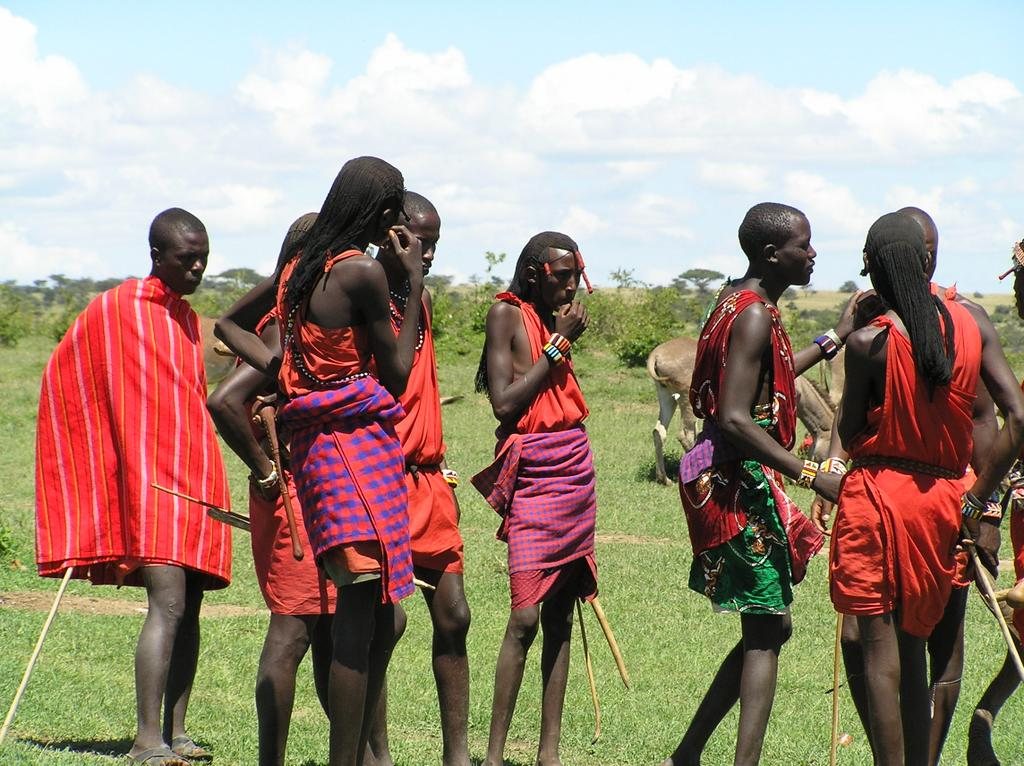
Between the 10th and 16th centuries, a combination of climate change - especially desertification - and population pressure pushed Nilotic groups southward along the Nile Valley. This migration fundamentally reshaped the demographic map of East Africa and divided them into three major groups based on geography and lifestyle.
The riverine Nilotic groups, most notably the Luo, moved into Uganda, Kenya, and Tanzania, settling near large lakes such as Lake Victoria and combining cattle herding with fishing. The plains Nilotic groups, including the Maasai, Samburu, and Turkana, migrated into the arid grasslands of Kenya and Tanzania, becoming nomadic cattle-warrior societies. The highland Nilotic groups, such as the Kalenjin, settled in the elevated regions of Kenya.
From the 16th to the 19th centuries, Nilotic peoples evolved beyond scattered pastoral tribes and developed significant social and political structures. The Dinka and Nuer of South Sudan built societies centered around cattle ownership, where cattle were not merely food, but also currency, sacrificial offerings, and symbols of power. During the 18th and 19th centuries, the Maasai dominated the vast grasslands of East Africa. Through the Moran warrior system - a highly disciplined military structure - they controlled many inland trade routes and were feared by neighboring tribes.
When European colonial powers - primarily the British and Germans - arrived, Nilotic groups responded differently. The Nandi and Maasai fought fiercely to defend their grazing lands. However, colonial borders fragmented traditional pastoral territories, forcing many Nilotic communities to transition from nomadic pastoralism to sedentary settlement - a transformation driven more by coercion than choice.
Nilotic peoples are often mistakenly generalized as representative of all East Africans, when in reality they are a striking biological exception within the region. Ethiopians or highland Kenyans - more familiar to Western audiences through marathon running and media exposure - generally possess significantly smaller frames. True Nilotic populations are concentrated mainly in the lowlands of the Nile Basin, especially South Sudan, and their height and body proportions differ dramatically from the rest of East Africa. The stereotype of the “small East African” does not accurately apply to the Nilotic peoples.
Nilotic populations possess what scientists often call the “Nilotic phenotype.” Exceptional height is the most visible trait: Dinka men average roughly 181–185 cm even under conditions of poor nutrition, and with optimal diets, the proportion of individuals exceeding 190–200 cm is considerably higher than in most human populations. Accompanying this height is extremely dark, melanin-rich skin - one of nature’s most effective protections against intense equatorial sunlight. Physically, they tend toward an ectomorphic build: narrow bones, lean bodies, minimal body fat, and long, enduring musculature.
The most remarkable feature, however, lies in their body proportions. Nilotic people possess disproportionately long legs relative to their upper bodies, not by coincidence, but as the result of thousands of years of evolutionary adaptation to equatorial environments.
To measure leg-to-torso proportions, anthropologists use the Skelic Index. Humans are broadly divided into three categories: brachy-skelic (legs shorter relative to the torso, common among Northeast Asians and Inuit populations for heat conservation), meso-skelic (balanced proportions, common among Europeans), and macro-skelic (legs significantly longer than the torso). Nilotic peoples occupy one of the most extreme ends of the macro-skelic spectrum.
A Nilotic man standing 190 cm tall may possess legs comparable in length to those of a 210 cm individual from another population. If two people sit down side by side, the Nilotic person often appears much shorter because so much of their height lies in the legs. This effect is especially visible in fashion, where Nilotic-origin supermodels display leg-to-body ratios that appear extraordinary even by industry standards - a phenomenon widely observed though not yet comprehensively quantified on a large scientific scale.
This elongation is not evenly distributed across the legs. Nilotic populations possess a significantly higher tibia-to-femur ratio compared to populations from colder climates. In other words, their shin bones are proportionally longer relative to the thigh bones, even though the femur remains the longer bone in both groups overall. In cold-adapted populations such as Northern Europeans, relatively shorter tibias reduce surface area and conserve heat. Long tibias follow Allen’s Rule - organisms in hot climates evolve longer limbs to maximize heat dissipation — while also creating longer strides and greater energy efficiency during movement.
A third factor reinforcing leg length is pelvic structure. Nilotic peoples tend to possess narrow, high-set pelvises. Because the pelvis is narrow, the femurs begin close together and descend almost vertically. Combined with extremely low fat accumulation around the hips, the legs appear to emerge directly from the torso. In many other populations, wider pelvises evolved to support greater muscle and fat mass, making the legs appear visually shorter and the body more robust.
From a biomechanical perspective, long legs combined with high calf insertions - where muscle mass sits close to the knee and the lower leg consists mostly of tendon - create strong leverage and maximize energy efficiency with every stride.
The way Nilotic peoples store fat also reflects the evolutionary pressures they experienced. East Asians tend to accumulate visceral fat around the abdomen and face. West Africans more commonly store subcutaneous fat around the hips and thighs, producing pear-shaped or hourglass physiques. Nilotic peoples, by contrast, generally maintain extremely low body-fat percentages, and when fat is present, it is distributed as a thin layer evenly beneath the skin.
This adaptation serves two obvious survival functions. First is thermoregulation: fat acts as insulation, so minimal fat combined with long, slender limbs - increasing surface area exposed to air - allows the body to cool blood rapidly under equatorial heat. Second is locomotor efficiency: fat concentrated around the hips or abdomen shifts the body’s center of gravity and increases energy expenditure when walking long distances across flat grasslands. The high center of gravity and lightweight build of Nilotic peoples are highly optimized for this style of movement.
The abdominal region of Nilotic individuals is typically flat, with a high waistline. Visceral fat was historically rare under traditional lifestyles. However, when Nilotic populations adopt Western industrial diets rich in sugar and fat - as observed among refugee communities in Australia or the United States - rates of diabetes can rise sharply. Because their bodies possess fewer “safe” fat-storage areas in the hips and thighs, excess fat is more likely to accumulate viscerally around internal organs, where it is metabolically dangerous.
Nilotic women reflect the same structural logic. Due to narrow, high pelvises, even when they gain weight, fat rarely accumulates into large gluteal masses as commonly seen among West African or African-American women. Instead, the body generally retains a lean silhouette and appears taller relative to its actual measurements.
Comparison with West Africans
West Africans and Nilotic peoples inhabit the same continent yet evolved under radically different selective pressures, producing two contrasting phenotypes. West Africans evolved in humid forests and savannahs where explosive strength and robust musculature were advantageous in dense environments. Nilotic peoples evolved in flat, intensely hot, open terrain where long-distance mobility and heat dissipation were more important.
As a result, two men standing 190 cm tall may differ substantially: the West African individual may outweigh the Nilotic individual by 10–15 kg due to denser bones and greater muscle mass. West Africans tend to develop “horizontally” - tall and powerfully built like athletes or strongmen. Nilotic peoples develop “vertically” - extremely tall with disproportionately elongated limbs.
This contrast appears most clearly in body contours. West Africans generally possess wider, lower pelvises, creating a foundation for large gluteal muscles and fat deposition around the hips and thighs. Combined with their characteristic fat distribution, this creates the pronounced S-shaped hourglass figure. Nilotic peoples possess narrower, deeper pelvises, with extremely small waists but also relatively narrow hips. From waist to hip, the transition is gentler and straighter. Their physique aligns more closely with the “supermodel” aesthetic - long, lean, and linear rather than curvaceous.
Even at similar body-fat percentages, these differences remain. West Africans often become larger “hourglass” figures with pronounced hip expansion relative to the waist, while Nilotic peoples become thicker “rectangular” frames - still slim-waisted but without the same pelvic flare. Nilotic peoples maintain small waists primarily because of skeletal structure; West Africans achieve the hourglass effect through broader pelvises and hip-focused fat storage.
Comparison with Balkan and Northern European Populations
Research by Pavel Grasgruber suggests that if Balkan populations - particularly Montenegrins and Bosnians - enjoyed economic conditions equivalent to the Netherlands, average male height could potentially reach 185–190 cm. Studies of Dinka populations show average male heights around 182–185 cm despite much poorer nutritional and medical conditions than those found in Europe.
Under equally ideal living conditions, Nilotic peoples might equal or surpass Balkan populations in absolute height. Their current averages are already exceptionally high despite historical constraints imposed by poverty and war. Data from Dinka refugee communities in Australia and the United States indicate that after only one generation exposed to full nutrition, many individuals reach or exceed 200 cm, though precise population-level statistics remain incomplete.
Yet absolute height alone does not capture the full difference. Balkan and Northern European populations carry high frequencies of genetic lineages associated with long-bone growth and massive skeletal frames. Consequently, two men of equal height can appear radically different. A 190 cm Balkan man often appears massive and broad-shouldered, with thick bones and heavy musculature. A 190 cm Nilotic man appears extremely lean, narrow-framed, and high-centered. Balkan and Northern European populations may represent the physically largest humans overall in terms of total body mass and frame size, while Nilotic peoples may possess the greatest potential for pure vertical stature.
Nilotic Peoples in Fashion and Sports
In the NBA, Nilotic-origin players such as Manute Bol and Bol Bol became athletic anomalies due to extraordinary height and wingspan. In fashion, Nilotic-origin supermodels such as Anok Yai, Adut Akech, and Alek Wek dominate high fashion runways because of leg-to-torso proportions rarely replicated by other populations regardless of diet or training.
In athletics, Kenya’s Kalenjin people dominate long-distance running through a combination of factors: genetic traits related to limb proportions and high calf insertions; lifelong adaptation to high-altitude environments; a deeply rooted running culture from childhood; appropriate nutrition; and structured training systems. Scientific research consistently emphasizes that no single factor - including genetics alone - can explain their dominance without the interaction of all the others.
The Maasai express the Nilotic warrior tradition differently. Traditional Maasai initiation rites once included solitary lion hunting, though this practice has largely disappeared due to wildlife conservation laws. The Adumu jumping dance - in which warriors repeatedly leap vertically from a standing position - reflects their distinctive biomechanics: long legs and highly elastic Achilles tendons functioning like springs to store and release energy with each landing.

Across thousands of years, the strongest thread connecting Nilotic history has been cattle. Wealth, social status, and marriage value were all measured through livestock ownership. Nilotic peoples gave individual names to cattle, composed songs for them, and believed cattle were divine gifts granted specifically to their people. In some traditional mythologies, because all cattle were originally believed to belong to the Nilotic peoples, raiding livestock from neighboring tribes was viewed not as theft, but as reclaiming rightful property.
Today, Nilotic peoples hold major political and cultural influence across East Africa. In South Sudan - the world’s youngest country - the Dinka and Nuer are the two largest ethnic groups and dominate much of the political landscape. In Kenya, the Luo - the ethnic group of former U.S. President Barack Obama’s father - and the Kalenjin, the ethnic group of President William Ruto, remain among the country’s most powerful political and economic forces. Internationally, the image of the Maasai in bright red garments, alongside Nilotic-origin supermodels such as Anok Yai and Adut Akech, has become a global symbol of African beauty and strength.
The Nilotic people originated in Upper Nubia, the region bordering present-day southern Egypt and northern Sudan. Their ancestors split from Eastern Sudanic-speaking populations roughly 4,000–5,000 years ago, forming a distinct branch both linguistically and genetically. Many anthropologists believe the Nilotic peoples shared close cultural and blood ties with the kingdoms south of Egypt, particularly the Kingdom of Kush. Some theories even suggest that certain Pharaonic lineages or Egyptian warrior elites possessed anthropological traits associated with Nilotic populations.
Between the 10th and 16th centuries, a combination of climate change - especially desertification - and population pressure pushed Nilotic groups southward along the Nile Valley. This migration fundamentally reshaped the demographic map of East Africa and divided them into three major groups based on geography and lifestyle.
The riverine Nilotic groups, most notably the Luo, moved into Uganda, Kenya, and Tanzania, settling near large lakes such as Lake Victoria and combining cattle herding with fishing. The plains Nilotic groups, including the Maasai, Samburu, and Turkana, migrated into the arid grasslands of Kenya and Tanzania, becoming nomadic cattle-warrior societies. The highland Nilotic groups, such as the Kalenjin, settled in the elevated regions of Kenya.
From the 16th to the 19th centuries, Nilotic peoples evolved beyond scattered pastoral tribes and developed significant social and political structures. The Dinka and Nuer of South Sudan built societies centered around cattle ownership, where cattle were not merely food, but also currency, sacrificial offerings, and symbols of power. During the 18th and 19th centuries, the Maasai dominated the vast grasslands of East Africa. Through the Moran warrior system - a highly disciplined military structure - they controlled many inland trade routes and were feared by neighboring tribes.
When European colonial powers - primarily the British and Germans - arrived, Nilotic groups responded differently. The Nandi and Maasai fought fiercely to defend their grazing lands. However, colonial borders fragmented traditional pastoral territories, forcing many Nilotic communities to transition from nomadic pastoralism to sedentary settlement - a transformation driven more by coercion than choice.
Nilotic peoples are often mistakenly generalized as representative of all East Africans, when in reality they are a striking biological exception within the region. Ethiopians or highland Kenyans - more familiar to Western audiences through marathon running and media exposure - generally possess significantly smaller frames. True Nilotic populations are concentrated mainly in the lowlands of the Nile Basin, especially South Sudan, and their height and body proportions differ dramatically from the rest of East Africa. The stereotype of the “small East African” does not accurately apply to the Nilotic peoples.
Nilotic populations possess what scientists often call the “Nilotic phenotype.” Exceptional height is the most visible trait: Dinka men average roughly 181–185 cm even under conditions of poor nutrition, and with optimal diets, the proportion of individuals exceeding 190–200 cm is considerably higher than in most human populations. Accompanying this height is extremely dark, melanin-rich skin - one of nature’s most effective protections against intense equatorial sunlight. Physically, they tend toward an ectomorphic build: narrow bones, lean bodies, minimal body fat, and long, enduring musculature.
The most remarkable feature, however, lies in their body proportions. Nilotic people possess disproportionately long legs relative to their upper bodies, not by coincidence, but as the result of thousands of years of evolutionary adaptation to equatorial environments.
To measure leg-to-torso proportions, anthropologists use the Skelic Index. Humans are broadly divided into three categories: brachy-skelic (legs shorter relative to the torso, common among Northeast Asians and Inuit populations for heat conservation), meso-skelic (balanced proportions, common among Europeans), and macro-skelic (legs significantly longer than the torso). Nilotic peoples occupy one of the most extreme ends of the macro-skelic spectrum.
A Nilotic man standing 190 cm tall may possess legs comparable in length to those of a 210 cm individual from another population. If two people sit down side by side, the Nilotic person often appears much shorter because so much of their height lies in the legs. This effect is especially visible in fashion, where Nilotic-origin supermodels display leg-to-body ratios that appear extraordinary even by industry standards - a phenomenon widely observed though not yet comprehensively quantified on a large scientific scale.
This elongation is not evenly distributed across the legs. Nilotic populations possess a significantly higher tibia-to-femur ratio compared to populations from colder climates. In other words, their shin bones are proportionally longer relative to the thigh bones, even though the femur remains the longer bone in both groups overall. In cold-adapted populations such as Northern Europeans, relatively shorter tibias reduce surface area and conserve heat. Long tibias follow Allen’s Rule - organisms in hot climates evolve longer limbs to maximize heat dissipation — while also creating longer strides and greater energy efficiency during movement.
A third factor reinforcing leg length is pelvic structure. Nilotic peoples tend to possess narrow, high-set pelvises. Because the pelvis is narrow, the femurs begin close together and descend almost vertically. Combined with extremely low fat accumulation around the hips, the legs appear to emerge directly from the torso. In many other populations, wider pelvises evolved to support greater muscle and fat mass, making the legs appear visually shorter and the body more robust.
From a biomechanical perspective, long legs combined with high calf insertions - where muscle mass sits close to the knee and the lower leg consists mostly of tendon - create strong leverage and maximize energy efficiency with every stride.
The way Nilotic peoples store fat also reflects the evolutionary pressures they experienced. East Asians tend to accumulate visceral fat around the abdomen and face. West Africans more commonly store subcutaneous fat around the hips and thighs, producing pear-shaped or hourglass physiques. Nilotic peoples, by contrast, generally maintain extremely low body-fat percentages, and when fat is present, it is distributed as a thin layer evenly beneath the skin.
This adaptation serves two obvious survival functions. First is thermoregulation: fat acts as insulation, so minimal fat combined with long, slender limbs - increasing surface area exposed to air - allows the body to cool blood rapidly under equatorial heat. Second is locomotor efficiency: fat concentrated around the hips or abdomen shifts the body’s center of gravity and increases energy expenditure when walking long distances across flat grasslands. The high center of gravity and lightweight build of Nilotic peoples are highly optimized for this style of movement.
The abdominal region of Nilotic individuals is typically flat, with a high waistline. Visceral fat was historically rare under traditional lifestyles. However, when Nilotic populations adopt Western industrial diets rich in sugar and fat - as observed among refugee communities in Australia or the United States - rates of diabetes can rise sharply. Because their bodies possess fewer “safe” fat-storage areas in the hips and thighs, excess fat is more likely to accumulate viscerally around internal organs, where it is metabolically dangerous.
Nilotic women reflect the same structural logic. Due to narrow, high pelvises, even when they gain weight, fat rarely accumulates into large gluteal masses as commonly seen among West African or African-American women. Instead, the body generally retains a lean silhouette and appears taller relative to its actual measurements.
Comparison with West Africans
West Africans and Nilotic peoples inhabit the same continent yet evolved under radically different selective pressures, producing two contrasting phenotypes. West Africans evolved in humid forests and savannahs where explosive strength and robust musculature were advantageous in dense environments. Nilotic peoples evolved in flat, intensely hot, open terrain where long-distance mobility and heat dissipation were more important.
As a result, two men standing 190 cm tall may differ substantially: the West African individual may outweigh the Nilotic individual by 10–15 kg due to denser bones and greater muscle mass. West Africans tend to develop “horizontally” - tall and powerfully built like athletes or strongmen. Nilotic peoples develop “vertically” - extremely tall with disproportionately elongated limbs.
This contrast appears most clearly in body contours. West Africans generally possess wider, lower pelvises, creating a foundation for large gluteal muscles and fat deposition around the hips and thighs. Combined with their characteristic fat distribution, this creates the pronounced S-shaped hourglass figure. Nilotic peoples possess narrower, deeper pelvises, with extremely small waists but also relatively narrow hips. From waist to hip, the transition is gentler and straighter. Their physique aligns more closely with the “supermodel” aesthetic - long, lean, and linear rather than curvaceous.
Even at similar body-fat percentages, these differences remain. West Africans often become larger “hourglass” figures with pronounced hip expansion relative to the waist, while Nilotic peoples become thicker “rectangular” frames - still slim-waisted but without the same pelvic flare. Nilotic peoples maintain small waists primarily because of skeletal structure; West Africans achieve the hourglass effect through broader pelvises and hip-focused fat storage.
Comparison with Balkan and Northern European Populations
Research by Pavel Grasgruber suggests that if Balkan populations - particularly Montenegrins and Bosnians - enjoyed economic conditions equivalent to the Netherlands, average male height could potentially reach 185–190 cm. Studies of Dinka populations show average male heights around 182–185 cm despite much poorer nutritional and medical conditions than those found in Europe.
Under equally ideal living conditions, Nilotic peoples might equal or surpass Balkan populations in absolute height. Their current averages are already exceptionally high despite historical constraints imposed by poverty and war. Data from Dinka refugee communities in Australia and the United States indicate that after only one generation exposed to full nutrition, many individuals reach or exceed 200 cm, though precise population-level statistics remain incomplete.
Yet absolute height alone does not capture the full difference. Balkan and Northern European populations carry high frequencies of genetic lineages associated with long-bone growth and massive skeletal frames. Consequently, two men of equal height can appear radically different. A 190 cm Balkan man often appears massive and broad-shouldered, with thick bones and heavy musculature. A 190 cm Nilotic man appears extremely lean, narrow-framed, and high-centered. Balkan and Northern European populations may represent the physically largest humans overall in terms of total body mass and frame size, while Nilotic peoples may possess the greatest potential for pure vertical stature.
Nilotic Peoples in Fashion and Sports
In the NBA, Nilotic-origin players such as Manute Bol and Bol Bol became athletic anomalies due to extraordinary height and wingspan. In fashion, Nilotic-origin supermodels such as Anok Yai, Adut Akech, and Alek Wek dominate high fashion runways because of leg-to-torso proportions rarely replicated by other populations regardless of diet or training.
In athletics, Kenya’s Kalenjin people dominate long-distance running through a combination of factors: genetic traits related to limb proportions and high calf insertions; lifelong adaptation to high-altitude environments; a deeply rooted running culture from childhood; appropriate nutrition; and structured training systems. Scientific research consistently emphasizes that no single factor - including genetics alone - can explain their dominance without the interaction of all the others.
The Maasai express the Nilotic warrior tradition differently. Traditional Maasai initiation rites once included solitary lion hunting, though this practice has largely disappeared due to wildlife conservation laws. The Adumu jumping dance - in which warriors repeatedly leap vertically from a standing position - reflects their distinctive biomechanics: long legs and highly elastic Achilles tendons functioning like springs to store and release energy with each landing.
Across thousands of years, the strongest thread connecting Nilotic history has been cattle. Wealth, social status, and marriage value were all measured through livestock ownership. Nilotic peoples gave individual names to cattle, composed songs for them, and believed cattle were divine gifts granted specifically to their people. In some traditional mythologies, because all cattle were originally believed to belong to the Nilotic peoples, raiding livestock from neighboring tribes was viewed not as theft, but as reclaiming rightful property.
Today, Nilotic peoples hold major political and cultural influence across East Africa. In South Sudan - the world’s youngest country - the Dinka and Nuer are the two largest ethnic groups and dominate much of the political landscape. In Kenya, the Luo - the ethnic group of former U.S. President Barack Obama’s father - and the Kalenjin, the ethnic group of President William Ruto, remain among the country’s most powerful political and economic forces. Internationally, the image of the Maasai in bright red garments, alongside Nilotic-origin supermodels such as Anok Yai and Adut Akech, has become a global symbol of African beauty and strength.