- Joined
- 20/7/24
- Bài viết
- 4,679
- Reaction score
- 0
- Points
- 36
Aert de Gelder – The Last Great Follower of Rembrandt
Aert de Gelder, also known as Arent de Gelder (October 26, 1645 - August 27, 1727), was a Dutch painter who was born and died in Dordrecht. He is particularly remembered as one of the last pupils of Rembrandt van Rijn, as well as one of the artists most devoted to preserving and continuing his master's artistic tradition into the eighteenth century.
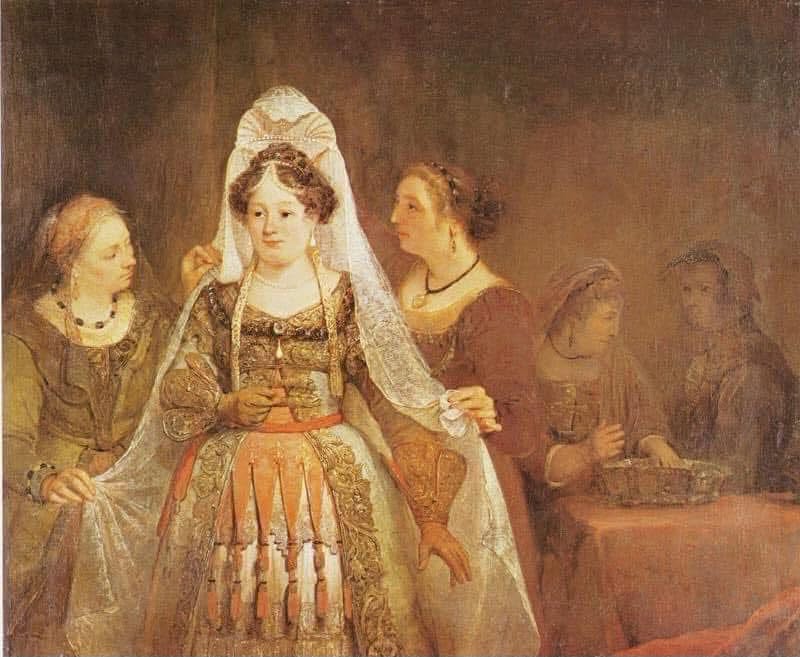
De Gelder began studying in Amsterdam in Rembrandt's studio from 1661 to 1663. Although his period of direct study under Rembrandt was relatively brief, it had a profound influence on his artistic development. Among Rembrandt's pupils, De Gelder was regarded as one of the most talented, while also becoming one of the master's most faithful followers.
At a time when many Dutch painters were moving toward new artistic trends, De Gelder continued to explore the visual language that Rembrandt had developed during the later years of his career. This decision placed him in a distinctive position within the history of Dutch painting. He was the only Dutch artist to continue pursuing the characteristics of Rembrandt's late style so consistently into the eighteenth century.
Rembrandt's influence can be seen clearly in De Gelder's choice of subjects, his treatment of figures, and his approach to emotional expression. He was particularly interested in stories from the Bible, but rather than portraying biblical figures simply as distant religious icons, he focused on their psychological states and their relationships with one another. His figures often appear vulnerable, emotionally expressive, and deeply human.
One of the defining characteristics of De Gelder's work is his ability to tell stories through painting. His figures are not merely arranged within a static scene; they are often placed at dramatic moments within a larger narrative. Tension, hesitation, suffering, compassion, and emotional conflict can be conveyed through their gestures, expressions, gazes, and interactions.
In “The Baptism of Christ,” De Gelder revisited one of the important subjects of Christian art. Rather than concentrating solely on the solemnity of the religious ceremony, however, he devoted considerable attention to the human and emotional dimensions of the figures. His use of light, color, and the treatment of the human form creates a psychologically charged atmosphere that reflects the influence of Rembrandt's late artistic tradition.
A similar approach can be seen in “Ahimelech Giving the Sword of Goliath to David.” De Gelder selected a moment with a strong narrative character, presenting the figures through their direct interaction. The biblical episode consequently becomes an encounter between recognizable human beings rather than merely an illustration of a religious story.
De Gelder's artistic language can therefore be characterized by three closely connected elements: storytelling, direct emotional expression, and an emphasis on the humanity of biblical characters. These qualities allowed his paintings to preserve important aspects of Rembrandt's artistic vision at a time when European painting was increasingly developing in different directions.
In courtly painting and in many earlier artistic traditions, religious, historical, and mythological figures were often represented with an emphasis on dignity, idealization, and distance from the viewer. De Gelder followed a different path. His figures could display deeply human emotions, including anxiety, suffering, compassion, hesitation, and tenderness. Through this approach, ancient biblical narratives became more closely connected to universal human experience.
De Gelder's loyalty to Rembrandt also reveals an important aspect of his artistic journey. He did not simply reproduce his teacher's style mechanically. Instead, he continued to develop its distinctive characteristics within a changing artistic environment. By maintaining Rembrandt's approaches to light, color, materiality, and emotional expression, De Gelder became a link between seventeenth-century Rembrandtian painting and the artistic developments of the early eighteenth century.
Aert de Gelder died in Dordrecht on August 27, 1727, at the age of 81. His legacy is closely associated with one of the final chapters in the Rembrandt tradition. If Rembrandt was one of the artists who helped define Dutch painting in the seventeenth century, De Gelder was the painter who carried aspects of that artistic language into the decades that followed the master's death.
Through his biblical and historical paintings, De Gelder developed an approach in which sacred figures could still be presented fundamentally as human beings with emotions, relationships, conflicts, and choices. This human-centered treatment established his distinctive place in Dutch art history and made Aert de Gelder one of the most notable and enduring followers of Rembrandt.
See more here
Aert de Gelder, also known as Arent de Gelder (October 26, 1645 - August 27, 1727), was a Dutch painter who was born and died in Dordrecht. He is particularly remembered as one of the last pupils of Rembrandt van Rijn, as well as one of the artists most devoted to preserving and continuing his master's artistic tradition into the eighteenth century.
De Gelder began studying in Amsterdam in Rembrandt's studio from 1661 to 1663. Although his period of direct study under Rembrandt was relatively brief, it had a profound influence on his artistic development. Among Rembrandt's pupils, De Gelder was regarded as one of the most talented, while also becoming one of the master's most faithful followers.
At a time when many Dutch painters were moving toward new artistic trends, De Gelder continued to explore the visual language that Rembrandt had developed during the later years of his career. This decision placed him in a distinctive position within the history of Dutch painting. He was the only Dutch artist to continue pursuing the characteristics of Rembrandt's late style so consistently into the eighteenth century.
Rembrandt's influence can be seen clearly in De Gelder's choice of subjects, his treatment of figures, and his approach to emotional expression. He was particularly interested in stories from the Bible, but rather than portraying biblical figures simply as distant religious icons, he focused on their psychological states and their relationships with one another. His figures often appear vulnerable, emotionally expressive, and deeply human.
One of the defining characteristics of De Gelder's work is his ability to tell stories through painting. His figures are not merely arranged within a static scene; they are often placed at dramatic moments within a larger narrative. Tension, hesitation, suffering, compassion, and emotional conflict can be conveyed through their gestures, expressions, gazes, and interactions.
In “The Baptism of Christ,” De Gelder revisited one of the important subjects of Christian art. Rather than concentrating solely on the solemnity of the religious ceremony, however, he devoted considerable attention to the human and emotional dimensions of the figures. His use of light, color, and the treatment of the human form creates a psychologically charged atmosphere that reflects the influence of Rembrandt's late artistic tradition.
A similar approach can be seen in “Ahimelech Giving the Sword of Goliath to David.” De Gelder selected a moment with a strong narrative character, presenting the figures through their direct interaction. The biblical episode consequently becomes an encounter between recognizable human beings rather than merely an illustration of a religious story.
De Gelder's artistic language can therefore be characterized by three closely connected elements: storytelling, direct emotional expression, and an emphasis on the humanity of biblical characters. These qualities allowed his paintings to preserve important aspects of Rembrandt's artistic vision at a time when European painting was increasingly developing in different directions.
In courtly painting and in many earlier artistic traditions, religious, historical, and mythological figures were often represented with an emphasis on dignity, idealization, and distance from the viewer. De Gelder followed a different path. His figures could display deeply human emotions, including anxiety, suffering, compassion, hesitation, and tenderness. Through this approach, ancient biblical narratives became more closely connected to universal human experience.
De Gelder's loyalty to Rembrandt also reveals an important aspect of his artistic journey. He did not simply reproduce his teacher's style mechanically. Instead, he continued to develop its distinctive characteristics within a changing artistic environment. By maintaining Rembrandt's approaches to light, color, materiality, and emotional expression, De Gelder became a link between seventeenth-century Rembrandtian painting and the artistic developments of the early eighteenth century.
Aert de Gelder died in Dordrecht on August 27, 1727, at the age of 81. His legacy is closely associated with one of the final chapters in the Rembrandt tradition. If Rembrandt was one of the artists who helped define Dutch painting in the seventeenth century, De Gelder was the painter who carried aspects of that artistic language into the decades that followed the master's death.
Through his biblical and historical paintings, De Gelder developed an approach in which sacred figures could still be presented fundamentally as human beings with emotions, relationships, conflicts, and choices. This human-centered treatment established his distinctive place in Dutch art history and made Aert de Gelder one of the most notable and enduring followers of Rembrandt.
See more here