- Joined
- 20/7/24
- Bài viết
- 4,595
- Reaction score
- 0
- Points
- 36
Edgar Alwin Payne – Master of the American Landscape and the Art of Composition
Edgar Alwin Payne (1883–1947) was one of the most distinguished American landscape painters of the early twentieth century. Renowned for his magnificent depictions of the Sierra Nevada, Lake Tahoe, the Pacific coastline, and the vast wilderness of the American West, Payne left an enduring legacy that extends far beyond his paintings. His innovative approach to composition and plein air painting has continued to influence generations of landscape artists around the world.
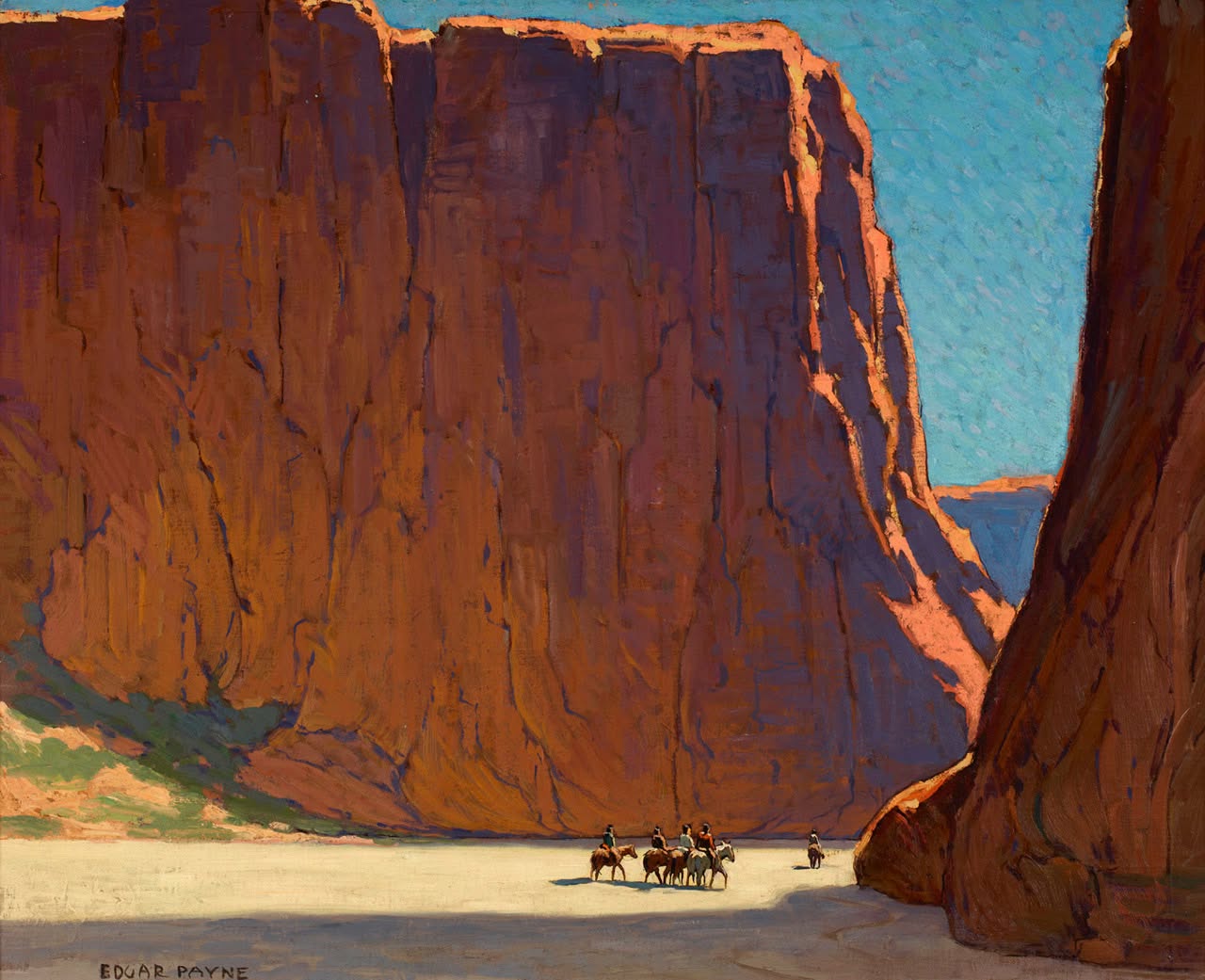
Born in 1883 in Washburn, Missouri, Edgar Alwin Payne was largely self-taught. Without formal academic training, he developed his artistic abilities through meticulous observation of nature, careful study of established masters, and relentless practice. Before becoming a full-time painter, Payne worked as a house painter and commercial artist. These early experiences sharpened his understanding of color, light, and surface texture, laying the foundation for his distinctive artistic style.
After settling in California, Payne discovered the landscapes that would define his career. Towering mountains, dense forests, crystal-clear lakes, and the dramatic Pacific coastline became recurring subjects throughout his body of work. He emerged as one of the leading figures of the California Impressionist movement while maintaining a strong connection to the earlier American landscape tradition, which emphasized structural composition, spatial harmony, and the grandeur of nature.
Working primarily in oil on canvas, Payne became known for his bold, energetic brushwork combined with carefully organized compositions. Brilliant sunlight, deep blue shadows, richly textured rock formations, expansive skies, and reflective waters all contribute to the remarkable vitality of his paintings. His landscapes possess both emotional power and structural balance, reflecting his lifelong conviction that composition is the essential foundation of great landscape painting.
Beyond his achievements as a painter, Edgar Payne made a lasting contribution to art education through his influential book Composition of Outdoor Painting. Widely regarded as one of the most important instructional texts on landscape painting, the book explores principles of composition, spatial design, visual rhythm, and the organization of natural elements within a painting. Even today, it remains a respected reference for artists, educators, and students seeking to master the fundamentals of outdoor painting.
Throughout his career, Payne traveled extensively, painting in Europe, Mexico, and Canada. These journeys broadened his artistic perspective and enriched his visual vocabulary. Nevertheless, he remained most closely associated with the spectacular scenery of the American West, particularly the High Sierra. His extensive travels enabled him to refine a highly personal style that balanced direct observation with carefully constructed compositions, resulting in landscapes that are both realistic and artistically compelling.
Edgar Alwin Payne passed away in Los Angeles in 1947 after a distinguished artistic career spanning several decades. Today, he is widely recognized as one of America's greatest landscape painters. His works are featured in museum collections, prestigious galleries, and major fine art auctions, where they continue to attract collectors and admirers alike. Payne's legacy lies not only in his breathtaking portrayals of North America's wilderness but also in his masterful understanding of composition, vigorous brushwork, and his enduring ability to capture the majesty and timeless beauty of the natural world.
See more here
Edgar Alwin Payne (1883–1947) was one of the most distinguished American landscape painters of the early twentieth century. Renowned for his magnificent depictions of the Sierra Nevada, Lake Tahoe, the Pacific coastline, and the vast wilderness of the American West, Payne left an enduring legacy that extends far beyond his paintings. His innovative approach to composition and plein air painting has continued to influence generations of landscape artists around the world.
Born in 1883 in Washburn, Missouri, Edgar Alwin Payne was largely self-taught. Without formal academic training, he developed his artistic abilities through meticulous observation of nature, careful study of established masters, and relentless practice. Before becoming a full-time painter, Payne worked as a house painter and commercial artist. These early experiences sharpened his understanding of color, light, and surface texture, laying the foundation for his distinctive artistic style.
After settling in California, Payne discovered the landscapes that would define his career. Towering mountains, dense forests, crystal-clear lakes, and the dramatic Pacific coastline became recurring subjects throughout his body of work. He emerged as one of the leading figures of the California Impressionist movement while maintaining a strong connection to the earlier American landscape tradition, which emphasized structural composition, spatial harmony, and the grandeur of nature.
Working primarily in oil on canvas, Payne became known for his bold, energetic brushwork combined with carefully organized compositions. Brilliant sunlight, deep blue shadows, richly textured rock formations, expansive skies, and reflective waters all contribute to the remarkable vitality of his paintings. His landscapes possess both emotional power and structural balance, reflecting his lifelong conviction that composition is the essential foundation of great landscape painting.
Beyond his achievements as a painter, Edgar Payne made a lasting contribution to art education through his influential book Composition of Outdoor Painting. Widely regarded as one of the most important instructional texts on landscape painting, the book explores principles of composition, spatial design, visual rhythm, and the organization of natural elements within a painting. Even today, it remains a respected reference for artists, educators, and students seeking to master the fundamentals of outdoor painting.
Throughout his career, Payne traveled extensively, painting in Europe, Mexico, and Canada. These journeys broadened his artistic perspective and enriched his visual vocabulary. Nevertheless, he remained most closely associated with the spectacular scenery of the American West, particularly the High Sierra. His extensive travels enabled him to refine a highly personal style that balanced direct observation with carefully constructed compositions, resulting in landscapes that are both realistic and artistically compelling.
Edgar Alwin Payne passed away in Los Angeles in 1947 after a distinguished artistic career spanning several decades. Today, he is widely recognized as one of America's greatest landscape painters. His works are featured in museum collections, prestigious galleries, and major fine art auctions, where they continue to attract collectors and admirers alike. Payne's legacy lies not only in his breathtaking portrayals of North America's wilderness but also in his masterful understanding of composition, vigorous brushwork, and his enduring ability to capture the majesty and timeless beauty of the natural world.
See more here