- Joined
- 20/7/24
- Bài viết
- 4,097
- Reaction score
- 0
- Points
- 36
Frederick Walker – A Storyteller of British Realist Painting in the Victorian Era
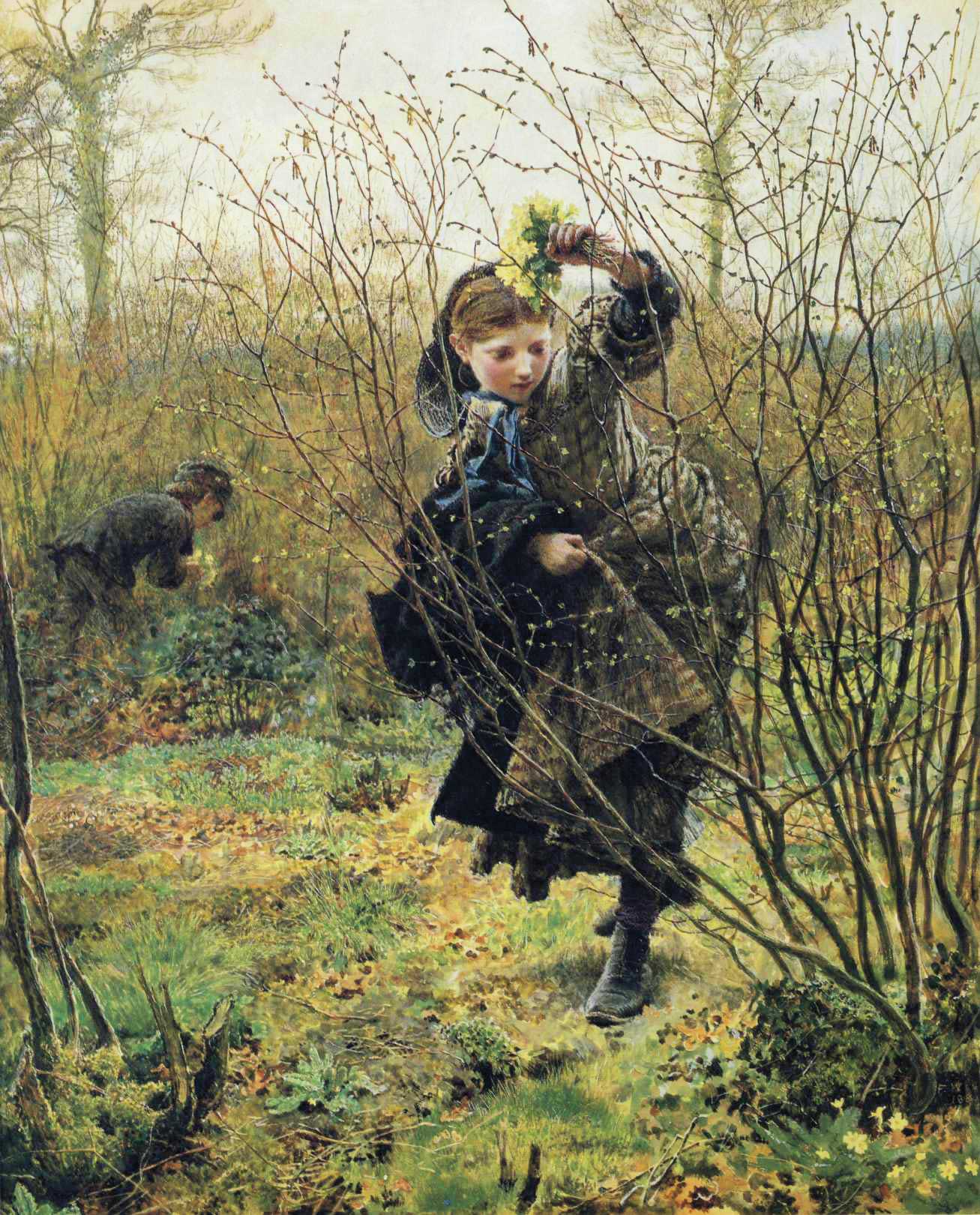
Frederick Walker was one of the most prominent social realist painters in nineteenth century Britain and also an outstanding illustrator of the Victorian era. Known for his remarkable sensitivity and poetic visual language, he became celebrated for portraying everyday life among working people and the quiet charm of the English countryside. His talent earned exceptional praise from Sir John Everett Millais, who once described him as “the greatest artist of the century,” a tribute that reflects Walker’s distinctive place in British art history.
Frederick Walker was born on May 26, 1840, at 90 Great Titchfield Street in Marylebone, London. He was the elder of twin brothers and the fifth son of William Henry Walker, a jeweller, and Ann Walker. He grew up in a large family of eight children. Artistic talent had already been present in the family, as his grandfather, William Walker, had also been a respected artist who regularly exhibited at the Royal Academy and the British Institution during the late eighteenth and early nineteenth centuries.
Walker’s childhood was shaped by both artistic curiosity and financial hardship. After his father passed away in 1847, his mother, who worked as an embroiderer, became the family’s primary source of income. Despite those challenges, Walker showed a remarkable gift for drawing from an early age. He attended local schools in London before continuing his education at North London Collegiate School in Camden. As a boy, he taught himself by copying printed illustrations with pen and ink and spent long hours sketching and studying works of art at the British Museum.
From 1855 to 1857, Walker worked in an architectural office on Gower Street. Although architecture offered a secure profession, his passion for painting led him to leave that path and fully devote himself to art. He continued his studies independently at the British Museum and later trained at the art school of James Mathews Leigh.
A major turning point came in March 1858 when Walker was admitted as a student to the Royal Academy. Later that same year, he began a part time apprenticeship in wood engraving under Josiah Wood Whymper in Lambeth. There he met fellow artists J. W. North and George Pinwell, friendships that would become important throughout his artistic journey. During this period, Walker continued painting whenever he could, developing his skills in both oil and watercolour.
Frederick Walker’s works are especially admired for the compassion and quiet humanity with which he approached everyday life. His paintings often depict rural communities, children, and ordinary moments with remarkable tenderness and emotional depth. Rather than focusing on grandeur or dramatic spectacle, he turned his attention to the dignity of common life and the subtle beauty found in familiar surroundings. This ability to combine realism with poetic atmosphere gave his art a timeless and deeply moving character.
Although his life was cut short when he died in St Fillans on June 4, 1875, Frederick Walker left a lasting legacy in British art. His paintings remain both vivid reflections of Victorian society and powerful examples of how art can elevate ordinary life into something meaningful and enduring. Today, Walker continues to be remembered as one of the defining voices of nineteenth century British realism, an artist who transformed everyday scenes into works of lasting beauty and human significance.
See more here
Frederick Walker was one of the most prominent social realist painters in nineteenth century Britain and also an outstanding illustrator of the Victorian era. Known for his remarkable sensitivity and poetic visual language, he became celebrated for portraying everyday life among working people and the quiet charm of the English countryside. His talent earned exceptional praise from Sir John Everett Millais, who once described him as “the greatest artist of the century,” a tribute that reflects Walker’s distinctive place in British art history.
Frederick Walker was born on May 26, 1840, at 90 Great Titchfield Street in Marylebone, London. He was the elder of twin brothers and the fifth son of William Henry Walker, a jeweller, and Ann Walker. He grew up in a large family of eight children. Artistic talent had already been present in the family, as his grandfather, William Walker, had also been a respected artist who regularly exhibited at the Royal Academy and the British Institution during the late eighteenth and early nineteenth centuries.
Walker’s childhood was shaped by both artistic curiosity and financial hardship. After his father passed away in 1847, his mother, who worked as an embroiderer, became the family’s primary source of income. Despite those challenges, Walker showed a remarkable gift for drawing from an early age. He attended local schools in London before continuing his education at North London Collegiate School in Camden. As a boy, he taught himself by copying printed illustrations with pen and ink and spent long hours sketching and studying works of art at the British Museum.
From 1855 to 1857, Walker worked in an architectural office on Gower Street. Although architecture offered a secure profession, his passion for painting led him to leave that path and fully devote himself to art. He continued his studies independently at the British Museum and later trained at the art school of James Mathews Leigh.
A major turning point came in March 1858 when Walker was admitted as a student to the Royal Academy. Later that same year, he began a part time apprenticeship in wood engraving under Josiah Wood Whymper in Lambeth. There he met fellow artists J. W. North and George Pinwell, friendships that would become important throughout his artistic journey. During this period, Walker continued painting whenever he could, developing his skills in both oil and watercolour.
Frederick Walker’s works are especially admired for the compassion and quiet humanity with which he approached everyday life. His paintings often depict rural communities, children, and ordinary moments with remarkable tenderness and emotional depth. Rather than focusing on grandeur or dramatic spectacle, he turned his attention to the dignity of common life and the subtle beauty found in familiar surroundings. This ability to combine realism with poetic atmosphere gave his art a timeless and deeply moving character.
Although his life was cut short when he died in St Fillans on June 4, 1875, Frederick Walker left a lasting legacy in British art. His paintings remain both vivid reflections of Victorian society and powerful examples of how art can elevate ordinary life into something meaningful and enduring. Today, Walker continues to be remembered as one of the defining voices of nineteenth century British realism, an artist who transformed everyday scenes into works of lasting beauty and human significance.
See more here