- Joined
- 20/7/24
- Bài viết
- 4,595
- Reaction score
- 0
- Points
- 36
Henri-Guillaume Schlesinger – A Distinguished French Portrait and Genre Painter of the Nineteenth Century
Henri-Guillaume Schlesinger (1814–1893), born Wilhelm Heinrich Schlesinger, was a celebrated French portrait and genre painter of German origin. He was especially admired for his graceful and emotionally expressive depictions of young women, which combined technical refinement with a delicate sensitivity to character. Over a career spanning more than five decades, Schlesinger established himself as a respected figure in French academic painting while also producing works of significant historical and cultural importance.
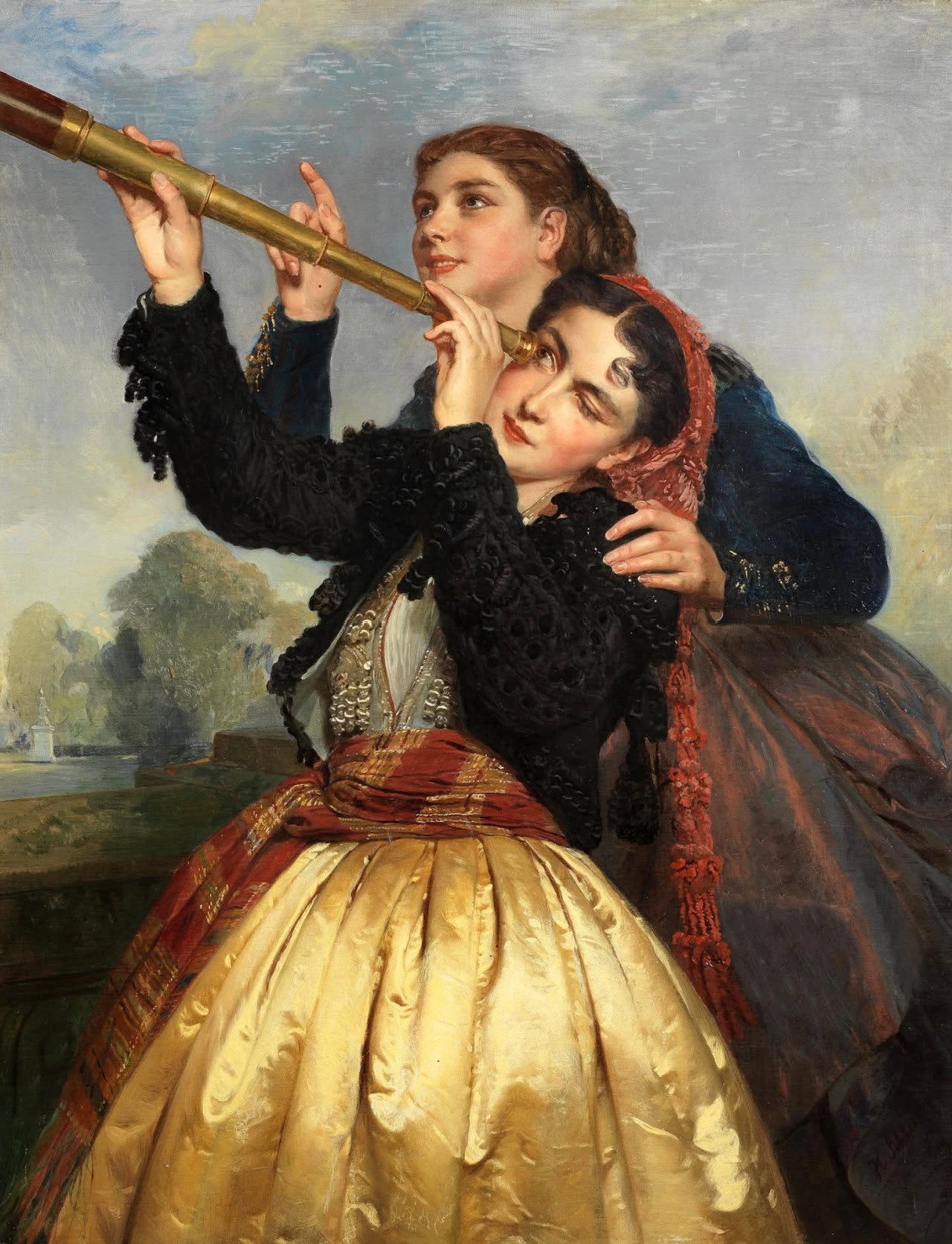
Born on August 6, 1814, in Frankfurt am Main, Germany, Schlesinger studied at the Academy of Fine Arts in Vienna, one of Europe's leading artistic institutions of the time. After completing his formal education, he began his professional career in Vienna before relocating to Paris, where he would spend most of his artistic life and gain widespread recognition.
In Paris, Schlesinger regularly exhibited at the prestigious Paris Salon from 1840 to 1889. Over nearly fifty years of participation, he presented numerous paintings and was awarded two medals in recognition of his artistic achievements. His works primarily focused on portraiture and genre scenes, distinguished by refined draftsmanship, harmonious color palettes, and an exceptional ability to capture the subtle emotions and personalities of his subjects.
A significant milestone in Schlesinger's career occurred in 1837 when he traveled to Istanbul. During his visit, he received official commissions from the Ottoman court to paint several portraits of Sultan Mahmud II. Among these were a monumental equestrian portrait and a remarkable depiction of the Sultan dressed in Western-style attire, reflecting the modernization reforms that characterized Mahmud II's reign. One of these portraits is now housed in the Topkapi Palace Museum in Istanbul, while another was presented by Mustafa Reşid Pasha, then the Ottoman Ambassador to France, to King Louis-Philippe and is currently displayed at the Palace of Versailles.
One of Schlesinger's most celebrated works, The Five Senses, was acquired in 1865 by Empress Eugénie, the wife of Emperor Napoleon III, for the imperial collection. This prestigious acquisition marked a high point in his career and firmly established his reputation within French artistic circles. The following year, he was appointed a Chevalier of the Legion of Honor, one of France's highest civilian distinctions, in recognition of his outstanding contributions to the arts.
In 1870, shortly before the outbreak of the Franco-Prussian War, Henri-Guillaume Schlesinger officially became a French citizen. However, the political turmoil brought about by the war and the subsequent Paris Commune compelled him to seek refuge in London, where he lived for a period before continuing his artistic pursuits.
In addition to his accomplishments as an oil painter, Schlesinger was an accomplished watercolorist and a highly skilled painter of miniature portraits on ivory, an art form that was particularly prized among European aristocracy during the nineteenth century. These miniature works demanded extraordinary precision, refined brushwork, and exceptional technical control, further demonstrating the breadth of his artistic abilities.
Henri-Guillaume Schlesinger passed away on February 21, 1893, in Neuilly-sur-Seine, France, after an artistic career that spanned more than fifty years. Today, he is remembered as one of the notable portrait and genre painters of nineteenth-century France. His paintings not only reflect the elegance and sophistication of European society during his era but also preserve important historical moments through portraits of royalty and prominent public figures. With his exceptional technical mastery, keen psychological insight, and refined artistic style, Henri-Guillaume Schlesinger remains a respected figure in the history of European academic art.
See more here
Henri-Guillaume Schlesinger (1814–1893), born Wilhelm Heinrich Schlesinger, was a celebrated French portrait and genre painter of German origin. He was especially admired for his graceful and emotionally expressive depictions of young women, which combined technical refinement with a delicate sensitivity to character. Over a career spanning more than five decades, Schlesinger established himself as a respected figure in French academic painting while also producing works of significant historical and cultural importance.
Born on August 6, 1814, in Frankfurt am Main, Germany, Schlesinger studied at the Academy of Fine Arts in Vienna, one of Europe's leading artistic institutions of the time. After completing his formal education, he began his professional career in Vienna before relocating to Paris, where he would spend most of his artistic life and gain widespread recognition.
In Paris, Schlesinger regularly exhibited at the prestigious Paris Salon from 1840 to 1889. Over nearly fifty years of participation, he presented numerous paintings and was awarded two medals in recognition of his artistic achievements. His works primarily focused on portraiture and genre scenes, distinguished by refined draftsmanship, harmonious color palettes, and an exceptional ability to capture the subtle emotions and personalities of his subjects.
A significant milestone in Schlesinger's career occurred in 1837 when he traveled to Istanbul. During his visit, he received official commissions from the Ottoman court to paint several portraits of Sultan Mahmud II. Among these were a monumental equestrian portrait and a remarkable depiction of the Sultan dressed in Western-style attire, reflecting the modernization reforms that characterized Mahmud II's reign. One of these portraits is now housed in the Topkapi Palace Museum in Istanbul, while another was presented by Mustafa Reşid Pasha, then the Ottoman Ambassador to France, to King Louis-Philippe and is currently displayed at the Palace of Versailles.
One of Schlesinger's most celebrated works, The Five Senses, was acquired in 1865 by Empress Eugénie, the wife of Emperor Napoleon III, for the imperial collection. This prestigious acquisition marked a high point in his career and firmly established his reputation within French artistic circles. The following year, he was appointed a Chevalier of the Legion of Honor, one of France's highest civilian distinctions, in recognition of his outstanding contributions to the arts.
In 1870, shortly before the outbreak of the Franco-Prussian War, Henri-Guillaume Schlesinger officially became a French citizen. However, the political turmoil brought about by the war and the subsequent Paris Commune compelled him to seek refuge in London, where he lived for a period before continuing his artistic pursuits.
In addition to his accomplishments as an oil painter, Schlesinger was an accomplished watercolorist and a highly skilled painter of miniature portraits on ivory, an art form that was particularly prized among European aristocracy during the nineteenth century. These miniature works demanded extraordinary precision, refined brushwork, and exceptional technical control, further demonstrating the breadth of his artistic abilities.
Henri-Guillaume Schlesinger passed away on February 21, 1893, in Neuilly-sur-Seine, France, after an artistic career that spanned more than fifty years. Today, he is remembered as one of the notable portrait and genre painters of nineteenth-century France. His paintings not only reflect the elegance and sophistication of European society during his era but also preserve important historical moments through portraits of royalty and prominent public figures. With his exceptional technical mastery, keen psychological insight, and refined artistic style, Henri-Guillaume Schlesinger remains a respected figure in the history of European academic art.
See more here