- Joined
- 20/7/24
- Bài viết
- 4,088
- Reaction score
- 0
- Points
- 36
Henri Martin – The Poetic Post-Impressionist Painter of France
Henri-Jean Guillaume "Henri" Martin (August 5, 1860 – November 12, 1943) was a renowned French painter best known for his poetic Post-Impressionist style. He was elected to the Académie des Beaux-Arts in 1917 and gained recognition for his mural series decorating the Salle de l'Assemblée générale - the meeting room of the Conseil d'État - at the Palais-Royal in Paris in the early 1920s.
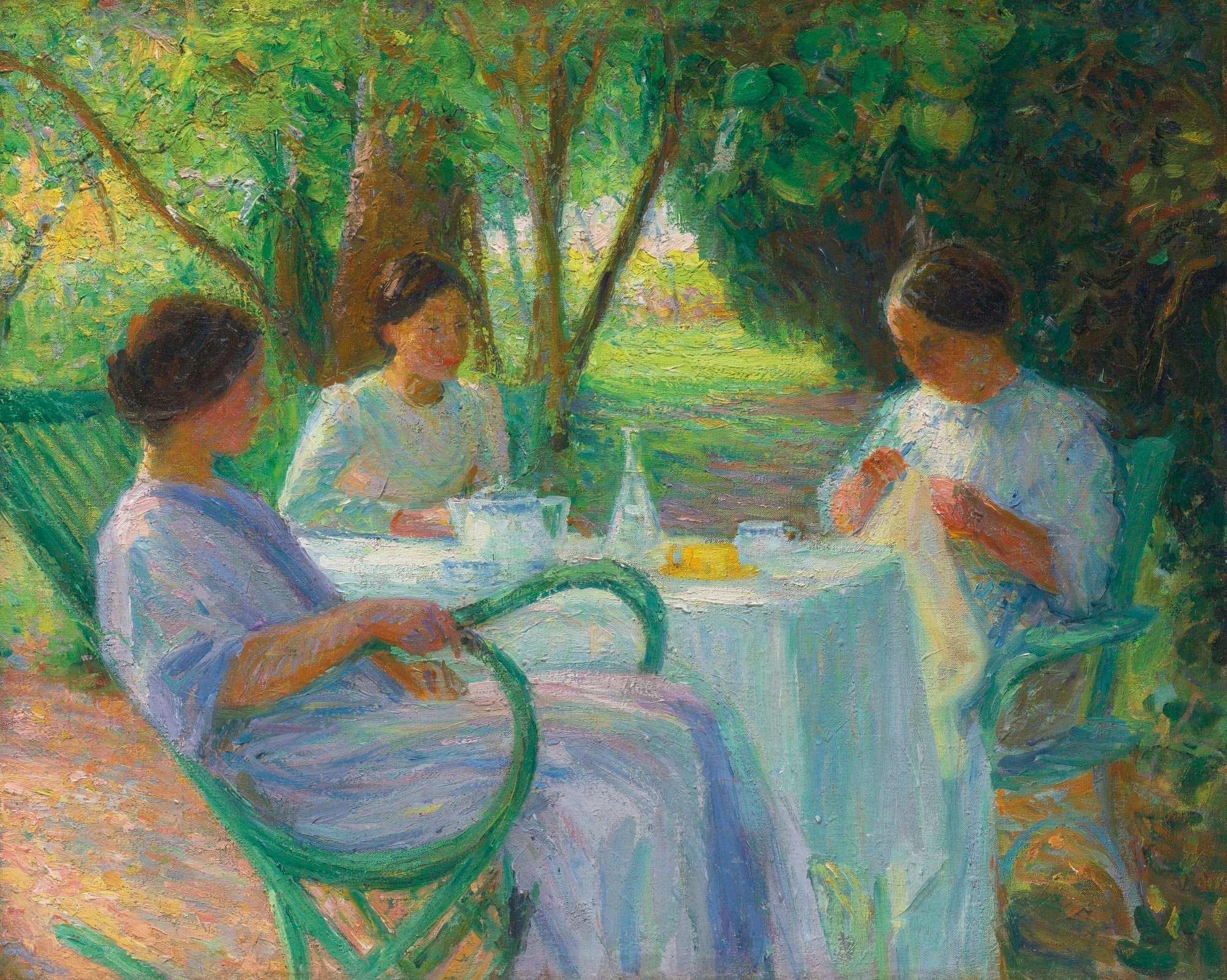
Many prestigious public institutions in France have commissioned and displayed his works, including the Élysée Palace, the Sorbonne, the Hôtel de Ville in Paris, the Palais de Justice in Paris, and the Capitole de Toulouse. His works are also held in significant collections at the Musée des Beaux-Arts de Bordeaux and the Musée des Augustins.
Henri Martin was born at 127 Grande-Rue Saint-Michel in Toulouse to a working-class family - his father was a French cabinetmaker, and his mother was of Italian descent. From an early age, Martin showed artistic talent and persuaded his father to allow him to pursue a career in painting. In 1877, he began studying at the Toulouse School of Fine Arts under the guidance of Jules Garipuy, and he was also a student of Henry-Eugène Delacroix. During this time, he met Marie-Charlotte Barbaroux, whom he married in 1881.
In 1879, Martin moved to Paris. Thanks to a municipal scholarship, he studied in the studio of Jean-Paul Laurens, a prominent academic painter who influenced Martin’s early work. Just four years later, Martin won his first medal at the Salon de Paris, and in 1886, he held his first exhibition there. He was then awarded a scholarship to travel to Italy, where he studied the works of Renaissance masters such as Giotto and Masaccio, alongside fellow painters Edmond Aman-Jean and Ernest Laurent. These influences helped shape Martin’s style, known for its classical harmony, serenity, and introspective depth.
In 1889, his submission to the Salon earned him a gold medal. His work during this time was closely aligned with the Pointillist movement. Over the following years, he received numerous honors: he was named a Knight of the Legion of Honour in 1896, promoted to Officer in 1905, and made Commander in 1914. At the 1900 Exposition Universelle (World Fair) in Paris, he was awarded the Grand Prize for his body of work. During this period, he became friends with the celebrated sculptor Auguste Rodin, who shared his deep passion for the arts.
Though Henri Martin was not seen as a groundbreaking figure in Neo-Impressionism, his work was highly regarded for its lyrical, contemplative qualities. His paintings were often compared to those of the Symbolist painter Puvis de Chavannes. He joined the Société nouvelle de peintres et de sculpteurs in 1899 and was elected to the Académie des Beaux-Arts in 1917.
Due to his introverted nature and longing for solitude, Martin left Paris in search of a peaceful environment for his work. After nearly a decade of searching, he purchased the Domaine de Marquayrol, a serene estate overlooking the village of Labastide-du-Vert near Cahors in southern France. There, surrounded by nature, he created what many consider his finest works. He died at Marquayrol in 1943.
In a 2020 profile published by Le Monde, journalist Raphaëlle Rérolle recounts the memories of local villagers: “The elders of this Lot village say that when the children left school, they weren’t allowed to stop near him. It was better to walk straight ahead, never forgetting to greet politely, or else the artist would complain to the schoolmistress.”
Among his four sons, two followed in his artistic footsteps: Claude-René Martin and Jacques Martin-Ferrières. Henri Martin also taught painting; among his students was the American artist Nellie Ellen Shepherd. His legacy is preserved at the Musée de Cahors Henri-Martin in Cahors, named in his honor and home to a significant collection of his work.
Notable works by Henri Martin include:
- La Tranquillité – A serene rural landscape rendered with soft light and color, typical of the French countryside.
- Les bords du Vert à Marquayrol – A famous landscape painted at his estate, capturing the beauty of the riverbanks.
- L'Heure calme – A meditative, quiet scene exemplifying the dreamy tone of his Post-Impressionist style.
- La République – A mural in the Hôtel de Ville in Paris, symbolizing the ideals of liberty and the French Republic.
- Le Jardin de Marquayrol – A bright, luminous garden scene that reflects the harmony of nature and inward emotion.
Henri Martin left behind a rich artistic legacy, with hundreds of paintings - primarily landscapes and monumental murals—that helped define the visual language of French art at the turn of the 20th century.
See more here
Henri-Jean Guillaume "Henri" Martin (August 5, 1860 – November 12, 1943) was a renowned French painter best known for his poetic Post-Impressionist style. He was elected to the Académie des Beaux-Arts in 1917 and gained recognition for his mural series decorating the Salle de l'Assemblée générale - the meeting room of the Conseil d'État - at the Palais-Royal in Paris in the early 1920s.
Many prestigious public institutions in France have commissioned and displayed his works, including the Élysée Palace, the Sorbonne, the Hôtel de Ville in Paris, the Palais de Justice in Paris, and the Capitole de Toulouse. His works are also held in significant collections at the Musée des Beaux-Arts de Bordeaux and the Musée des Augustins.
Henri Martin was born at 127 Grande-Rue Saint-Michel in Toulouse to a working-class family - his father was a French cabinetmaker, and his mother was of Italian descent. From an early age, Martin showed artistic talent and persuaded his father to allow him to pursue a career in painting. In 1877, he began studying at the Toulouse School of Fine Arts under the guidance of Jules Garipuy, and he was also a student of Henry-Eugène Delacroix. During this time, he met Marie-Charlotte Barbaroux, whom he married in 1881.
In 1879, Martin moved to Paris. Thanks to a municipal scholarship, he studied in the studio of Jean-Paul Laurens, a prominent academic painter who influenced Martin’s early work. Just four years later, Martin won his first medal at the Salon de Paris, and in 1886, he held his first exhibition there. He was then awarded a scholarship to travel to Italy, where he studied the works of Renaissance masters such as Giotto and Masaccio, alongside fellow painters Edmond Aman-Jean and Ernest Laurent. These influences helped shape Martin’s style, known for its classical harmony, serenity, and introspective depth.
In 1889, his submission to the Salon earned him a gold medal. His work during this time was closely aligned with the Pointillist movement. Over the following years, he received numerous honors: he was named a Knight of the Legion of Honour in 1896, promoted to Officer in 1905, and made Commander in 1914. At the 1900 Exposition Universelle (World Fair) in Paris, he was awarded the Grand Prize for his body of work. During this period, he became friends with the celebrated sculptor Auguste Rodin, who shared his deep passion for the arts.
Though Henri Martin was not seen as a groundbreaking figure in Neo-Impressionism, his work was highly regarded for its lyrical, contemplative qualities. His paintings were often compared to those of the Symbolist painter Puvis de Chavannes. He joined the Société nouvelle de peintres et de sculpteurs in 1899 and was elected to the Académie des Beaux-Arts in 1917.
Due to his introverted nature and longing for solitude, Martin left Paris in search of a peaceful environment for his work. After nearly a decade of searching, he purchased the Domaine de Marquayrol, a serene estate overlooking the village of Labastide-du-Vert near Cahors in southern France. There, surrounded by nature, he created what many consider his finest works. He died at Marquayrol in 1943.
In a 2020 profile published by Le Monde, journalist Raphaëlle Rérolle recounts the memories of local villagers: “The elders of this Lot village say that when the children left school, they weren’t allowed to stop near him. It was better to walk straight ahead, never forgetting to greet politely, or else the artist would complain to the schoolmistress.”
Among his four sons, two followed in his artistic footsteps: Claude-René Martin and Jacques Martin-Ferrières. Henri Martin also taught painting; among his students was the American artist Nellie Ellen Shepherd. His legacy is preserved at the Musée de Cahors Henri-Martin in Cahors, named in his honor and home to a significant collection of his work.
Notable works by Henri Martin include:
- La Tranquillité – A serene rural landscape rendered with soft light and color, typical of the French countryside.
- Les bords du Vert à Marquayrol – A famous landscape painted at his estate, capturing the beauty of the riverbanks.
- L'Heure calme – A meditative, quiet scene exemplifying the dreamy tone of his Post-Impressionist style.
- La République – A mural in the Hôtel de Ville in Paris, symbolizing the ideals of liberty and the French Republic.
- Le Jardin de Marquayrol – A bright, luminous garden scene that reflects the harmony of nature and inward emotion.
Henri Martin left behind a rich artistic legacy, with hundreds of paintings - primarily landscapes and monumental murals—that helped define the visual language of French art at the turn of the 20th century.
See more here