- Joined
- 20/7/24
- Bài viết
- 4,292
- Reaction score
- 0
- Points
- 36
Horace Vernet – The Painter Who Redefined the Visual Language of War in Nineteenth Century France
Horace Vernet, born Émile Jean Horace Vernet on June 30, 1789, and deceased on January 17, 1863, was one of the most influential French painters of the nineteenth century. Celebrated for his battle scenes, portraits, and Orientalist subjects, Vernet transformed the way military history was represented in art. Rather than idealizing warfare through the conventions of Neoclassicism, he pursued a more realistic and emotionally compelling approach, portraying soldiers and battlefields with authenticity and dramatic intensity. His paintings serve not only as remarkable artistic achievements but also as valuable historical documents that reflect the political ambitions, military triumphs, and colonial ideology of nineteenth century France.
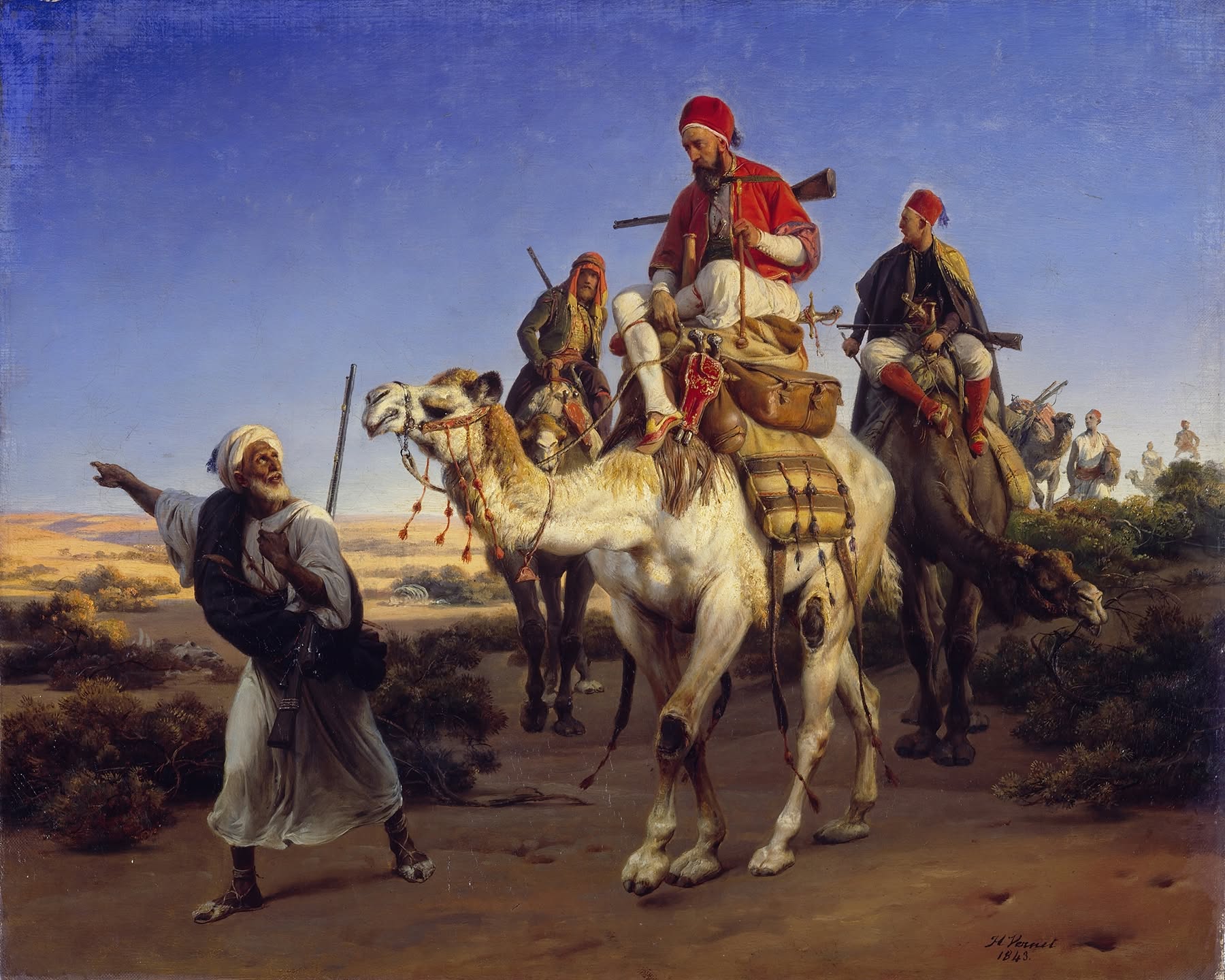
Horace Vernet was born in the Palace of the Louvre in Paris during the turbulent years of the French Revolution. He belonged to one of France’s most distinguished artistic families. His father, Carle Vernet, was an accomplished painter, while his grandfather, Claude Joseph Vernet, was one of the greatest French landscape painters of the eighteenth century. Growing up in such an environment provided Horace with rigorous artistic training and early exposure to the cultural elite of France.
Although educated within the academic tradition, Vernet soon became dissatisfied with the rigid ideals of French Neoclassicism. Rather than following the heroic and highly idealized models established by Jacques-Louis David, he turned his attention to contemporary life. For Vernet, history was not merely a sequence of glorious victories but a record of real people confronting the realities of conflict, sacrifice, and survival.
During the reign of Napoleon Bonaparte, Vernet introduced a fresh vision of the French soldier. Instead of depicting military figures as flawless classical heroes, he presented them as ordinary individuals displaying courage, exhaustion, and humanity. At just twenty years of age, he attracted considerable attention with The Taking of an Entrenched Camp, a work that marked the beginning of his reputation as one of France’s leading military painters. Other works from this period, including Dog of the Regiment, Trumpeter's Horse, and The Death of Poniatowski, further demonstrated his commitment to portraying warfare with realism rather than theatrical idealization.
Vernet’s reputation continued to grow during the Bourbon Restoration when the Duke of Orléans, who would later become King Louis Philippe I, commissioned him to paint a series of historical battles. These works earned widespread admiration for their remarkable historical accuracy, dynamic compositions, and extraordinary attention to detail. Contemporary critics were equally astonished by the astonishing speed with which Vernet completed large scale canvases filled with complex military action.
Among the finest achievements of this period is the celebrated Four Battles series, consisting of The Battle of Jemappes (1821), The Battle of Montmirail (1822), The Battle of Hanau (1824), and The Battle of Valmy (1826). These paintings demonstrate Vernet’s exceptional ability to organize large numbers of figures within coherent and dramatic compositions. The landscapes themselves become active participants in the narrative, heightening the emotional atmosphere and reinforcing the historical significance of each battle.
From 1829 to 1835, Vernet served as Director of the French Academy in Rome, one of the highest artistic appointments available to a French painter. Throughout his distinguished career, he received numerous prestigious commissions from the French monarchy and the state. One of his greatest patrons was King Louis Philippe, who entrusted him with decorating the Constantine Room in the Palace of Versailles, a monumental project that he completed in only three years.
One of Vernet’s most historically significant commissions centered on France’s colonial expansion into Algeria. Commissioned to celebrate what the monarchy described as the "fruits of colonization," he painted scenes depicting French officers training Algerian soldiers, engineers constructing roads, and military personnel cultivating agricultural land. Executed in a Neoclassical style that consciously echoed the legacy of the Roman Empire in North Africa, these paintings visually reinforced France’s narrative of its so called civilizing mission.
Paintings such as The Capture of the Smala and The Capture of Constantine were enthusiastically received by the French public for their vivid and dramatic portrayal of military campaigns. Today, however, art historians also examine these works as important visual documents that reveal how nineteenth century academic painting contributed to shaping public perceptions of colonialism and imperial power.
Following the French Revolution of 1848 and the collapse of the July Monarchy, Vernet successfully adapted to the changing political climate by becoming an official painter under Napoleon III during the Second French Empire. He continued accompanying French military campaigns and remained committed to portraying historical events through direct observation rather than idealized imagination.
During the Crimean War, Vernet traveled alongside the French Army to document the conflict firsthand. Works such as The Battle of the Alma were based on his own observations and reflected his determination to portray warfare truthfully, even when the results were less flattering than patriotic expectations demanded. A famous anecdote, whether entirely factual or not, perfectly illustrates his artistic philosophy. When a monarch reportedly asked him to remove an unpopular general from one of his paintings, Vernet is said to have replied, “I am a painter of history, Sire, and I will not violate the truth.” This statement has come to symbolize his lifelong commitment to historical integrity.
In addition to painting, Vernet was among the earliest artists to recognize the artistic potential of photography. Fascinated by the newly invented daguerreotype process, he used photographs as reference material during his travels in Egypt. While stopping in Malta in 1840 on his journey to North Africa, he is believed to have taken the earliest known photographs ever made on the island at Fort Manoel. Although these images have since been lost, they demonstrate his openness to technological innovation and his willingness to embrace new visual media in support of his artistic practice.
Horace Vernet died in Paris in 1863, leaving behind an extraordinary body of work that encompasses military history, portraiture, Orientalist painting, and documentary realism. Today, his paintings remain invaluable not only for their artistic excellence but also for their contribution to the study of military history, political ideology, colonialism, and nineteenth century European culture. By combining historical precision with compelling visual storytelling, Horace Vernet fundamentally reshaped the representation of war in Western art and secured his place as one of France’s greatest history painters.
See more here
Horace Vernet, born Émile Jean Horace Vernet on June 30, 1789, and deceased on January 17, 1863, was one of the most influential French painters of the nineteenth century. Celebrated for his battle scenes, portraits, and Orientalist subjects, Vernet transformed the way military history was represented in art. Rather than idealizing warfare through the conventions of Neoclassicism, he pursued a more realistic and emotionally compelling approach, portraying soldiers and battlefields with authenticity and dramatic intensity. His paintings serve not only as remarkable artistic achievements but also as valuable historical documents that reflect the political ambitions, military triumphs, and colonial ideology of nineteenth century France.
Horace Vernet was born in the Palace of the Louvre in Paris during the turbulent years of the French Revolution. He belonged to one of France’s most distinguished artistic families. His father, Carle Vernet, was an accomplished painter, while his grandfather, Claude Joseph Vernet, was one of the greatest French landscape painters of the eighteenth century. Growing up in such an environment provided Horace with rigorous artistic training and early exposure to the cultural elite of France.
Although educated within the academic tradition, Vernet soon became dissatisfied with the rigid ideals of French Neoclassicism. Rather than following the heroic and highly idealized models established by Jacques-Louis David, he turned his attention to contemporary life. For Vernet, history was not merely a sequence of glorious victories but a record of real people confronting the realities of conflict, sacrifice, and survival.
During the reign of Napoleon Bonaparte, Vernet introduced a fresh vision of the French soldier. Instead of depicting military figures as flawless classical heroes, he presented them as ordinary individuals displaying courage, exhaustion, and humanity. At just twenty years of age, he attracted considerable attention with The Taking of an Entrenched Camp, a work that marked the beginning of his reputation as one of France’s leading military painters. Other works from this period, including Dog of the Regiment, Trumpeter's Horse, and The Death of Poniatowski, further demonstrated his commitment to portraying warfare with realism rather than theatrical idealization.
Vernet’s reputation continued to grow during the Bourbon Restoration when the Duke of Orléans, who would later become King Louis Philippe I, commissioned him to paint a series of historical battles. These works earned widespread admiration for their remarkable historical accuracy, dynamic compositions, and extraordinary attention to detail. Contemporary critics were equally astonished by the astonishing speed with which Vernet completed large scale canvases filled with complex military action.
Among the finest achievements of this period is the celebrated Four Battles series, consisting of The Battle of Jemappes (1821), The Battle of Montmirail (1822), The Battle of Hanau (1824), and The Battle of Valmy (1826). These paintings demonstrate Vernet’s exceptional ability to organize large numbers of figures within coherent and dramatic compositions. The landscapes themselves become active participants in the narrative, heightening the emotional atmosphere and reinforcing the historical significance of each battle.
From 1829 to 1835, Vernet served as Director of the French Academy in Rome, one of the highest artistic appointments available to a French painter. Throughout his distinguished career, he received numerous prestigious commissions from the French monarchy and the state. One of his greatest patrons was King Louis Philippe, who entrusted him with decorating the Constantine Room in the Palace of Versailles, a monumental project that he completed in only three years.
One of Vernet’s most historically significant commissions centered on France’s colonial expansion into Algeria. Commissioned to celebrate what the monarchy described as the "fruits of colonization," he painted scenes depicting French officers training Algerian soldiers, engineers constructing roads, and military personnel cultivating agricultural land. Executed in a Neoclassical style that consciously echoed the legacy of the Roman Empire in North Africa, these paintings visually reinforced France’s narrative of its so called civilizing mission.
Paintings such as The Capture of the Smala and The Capture of Constantine were enthusiastically received by the French public for their vivid and dramatic portrayal of military campaigns. Today, however, art historians also examine these works as important visual documents that reveal how nineteenth century academic painting contributed to shaping public perceptions of colonialism and imperial power.
Following the French Revolution of 1848 and the collapse of the July Monarchy, Vernet successfully adapted to the changing political climate by becoming an official painter under Napoleon III during the Second French Empire. He continued accompanying French military campaigns and remained committed to portraying historical events through direct observation rather than idealized imagination.
During the Crimean War, Vernet traveled alongside the French Army to document the conflict firsthand. Works such as The Battle of the Alma were based on his own observations and reflected his determination to portray warfare truthfully, even when the results were less flattering than patriotic expectations demanded. A famous anecdote, whether entirely factual or not, perfectly illustrates his artistic philosophy. When a monarch reportedly asked him to remove an unpopular general from one of his paintings, Vernet is said to have replied, “I am a painter of history, Sire, and I will not violate the truth.” This statement has come to symbolize his lifelong commitment to historical integrity.
In addition to painting, Vernet was among the earliest artists to recognize the artistic potential of photography. Fascinated by the newly invented daguerreotype process, he used photographs as reference material during his travels in Egypt. While stopping in Malta in 1840 on his journey to North Africa, he is believed to have taken the earliest known photographs ever made on the island at Fort Manoel. Although these images have since been lost, they demonstrate his openness to technological innovation and his willingness to embrace new visual media in support of his artistic practice.
Horace Vernet died in Paris in 1863, leaving behind an extraordinary body of work that encompasses military history, portraiture, Orientalist painting, and documentary realism. Today, his paintings remain invaluable not only for their artistic excellence but also for their contribution to the study of military history, political ideology, colonialism, and nineteenth century European culture. By combining historical precision with compelling visual storytelling, Horace Vernet fundamentally reshaped the representation of war in Western art and secured his place as one of France’s greatest history painters.
See more here