- Joined
- 20/7/24
- Bài viết
- 3,876
- Reaction score
- 0
- Points
- 36
John William Godward – The Last Master of English Neoclassicism
John William Godward (August 9, 1861 – December 13, 1922) was an English painter regarded as one of the final masters of the Neoclassical school. A protégé of Sir Lawrence Alma-Tadema, he became renowned for his exquisite depictions of classical beauty - marble terraces bathed in Mediterranean sunlight, elegant women draped in flowing garments, and serene settings that seemed untouched by time. However, as modern art rose to prominence in the early 20th century, his style fell out of favor with the artistic mainstream.
Godward was born in Wilton Grove, Wimbledon, the eldest of five children of Sarah Eboral and John Godward, an investment clerk at the Law Life Assurance Society in London. He was named after his father and grandfather and was christened at St. Mary’s Church in Battersea on October 17, 1861. The strict and controlling nature of his parents left a deep mark on his personality, shaping him into a shy and reclusive figure throughout his life.
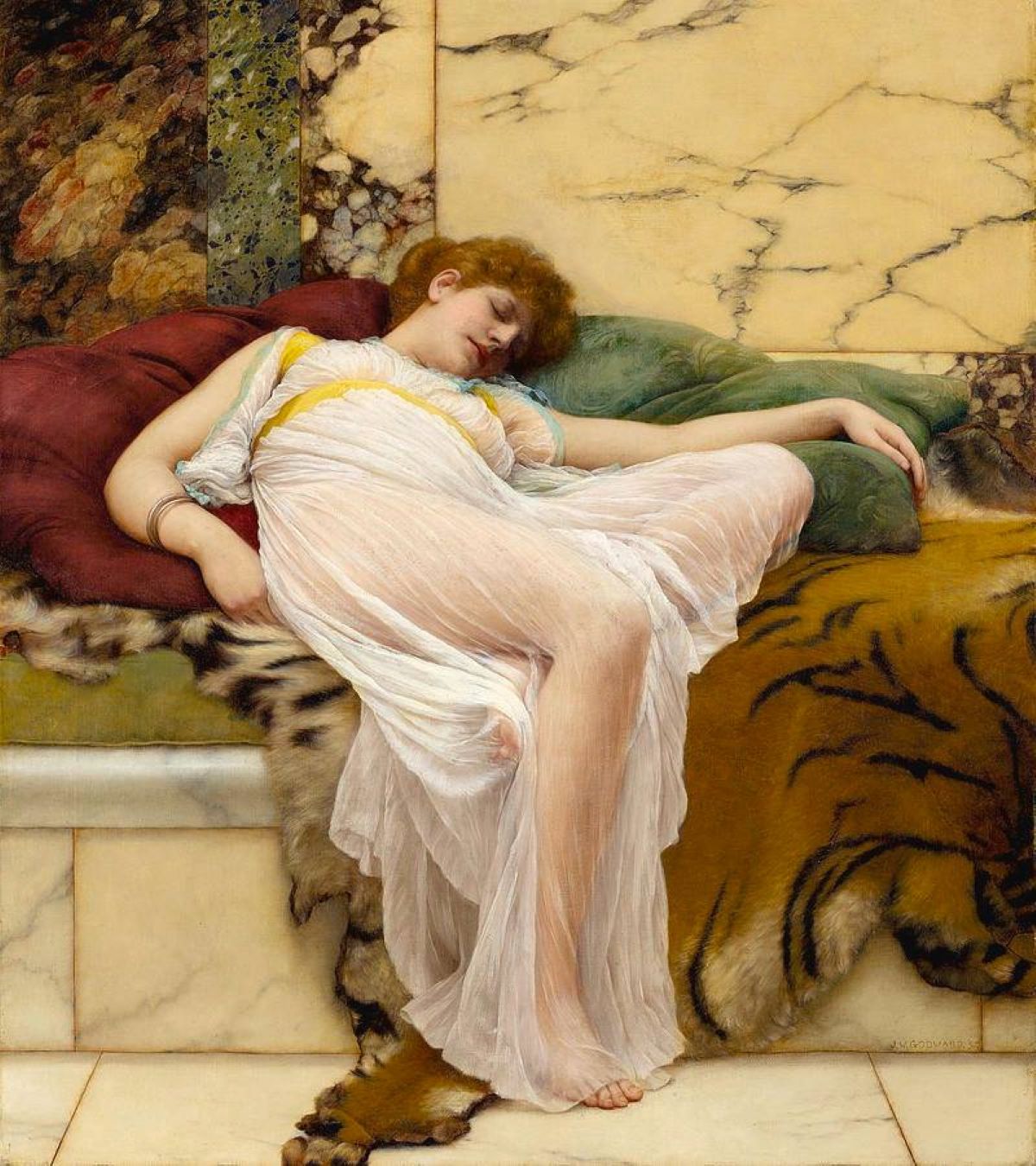
During his career, Godward produced numerous masterpieces that showcased his extraordinary technical skill, particularly in the rendering of textures. From the softness of skin and the gleam of polished marble to the delicate folds of fabric and the vibrant hues of flowers under the sun, every detail was meticulously crafted. Notable works such as Dolce far niente, A Fair Reflection, The Belvedere, The Old, Old Story, Idle Moments, and The Favourite portray classical women in moments of stillness and contemplation, surrounded by an atmosphere of tranquility and timeless beauty.
Though celebrated during the late Victorian and Edwardian periods, Godward gradually became isolated as the art world embraced bold modernist ideas. Unable to adapt to the new era and feeling alienated from contemporary tastes, he withdrew from public life. In 1922, overcome by despair, he took his own life. Even so, his surviving works remain as an emotional farewell to the golden age of Neoclassicism and a testament to his unwavering dedication to his own artistic ideals.
See more here
John William Godward (August 9, 1861 – December 13, 1922) was an English painter regarded as one of the final masters of the Neoclassical school. A protégé of Sir Lawrence Alma-Tadema, he became renowned for his exquisite depictions of classical beauty - marble terraces bathed in Mediterranean sunlight, elegant women draped in flowing garments, and serene settings that seemed untouched by time. However, as modern art rose to prominence in the early 20th century, his style fell out of favor with the artistic mainstream.
Godward was born in Wilton Grove, Wimbledon, the eldest of five children of Sarah Eboral and John Godward, an investment clerk at the Law Life Assurance Society in London. He was named after his father and grandfather and was christened at St. Mary’s Church in Battersea on October 17, 1861. The strict and controlling nature of his parents left a deep mark on his personality, shaping him into a shy and reclusive figure throughout his life.
During his career, Godward produced numerous masterpieces that showcased his extraordinary technical skill, particularly in the rendering of textures. From the softness of skin and the gleam of polished marble to the delicate folds of fabric and the vibrant hues of flowers under the sun, every detail was meticulously crafted. Notable works such as Dolce far niente, A Fair Reflection, The Belvedere, The Old, Old Story, Idle Moments, and The Favourite portray classical women in moments of stillness and contemplation, surrounded by an atmosphere of tranquility and timeless beauty.
Though celebrated during the late Victorian and Edwardian periods, Godward gradually became isolated as the art world embraced bold modernist ideas. Unable to adapt to the new era and feeling alienated from contemporary tastes, he withdrew from public life. In 1922, overcome by despair, he took his own life. Even so, his surviving works remain as an emotional farewell to the golden age of Neoclassicism and a testament to his unwavering dedication to his own artistic ideals.
See more here