- Joined
- 20/7/24
- Bài viết
- 4,379
- Reaction score
- 0
- Points
- 36
Modernist Architecture in Vietnam – A Legacy of the Modernization Era
Modernist architecture first appeared in Vietnam in the early 20th century and flourished between the 1950s and 1975. Characterized by functionality, minimalist design, and adaptability to the local environment, this architectural movement reshaped the urban landscapes of major cities such as Hanoi, Hai Phong, Da Nang, Hue, and especially Ho Chi Minh City.
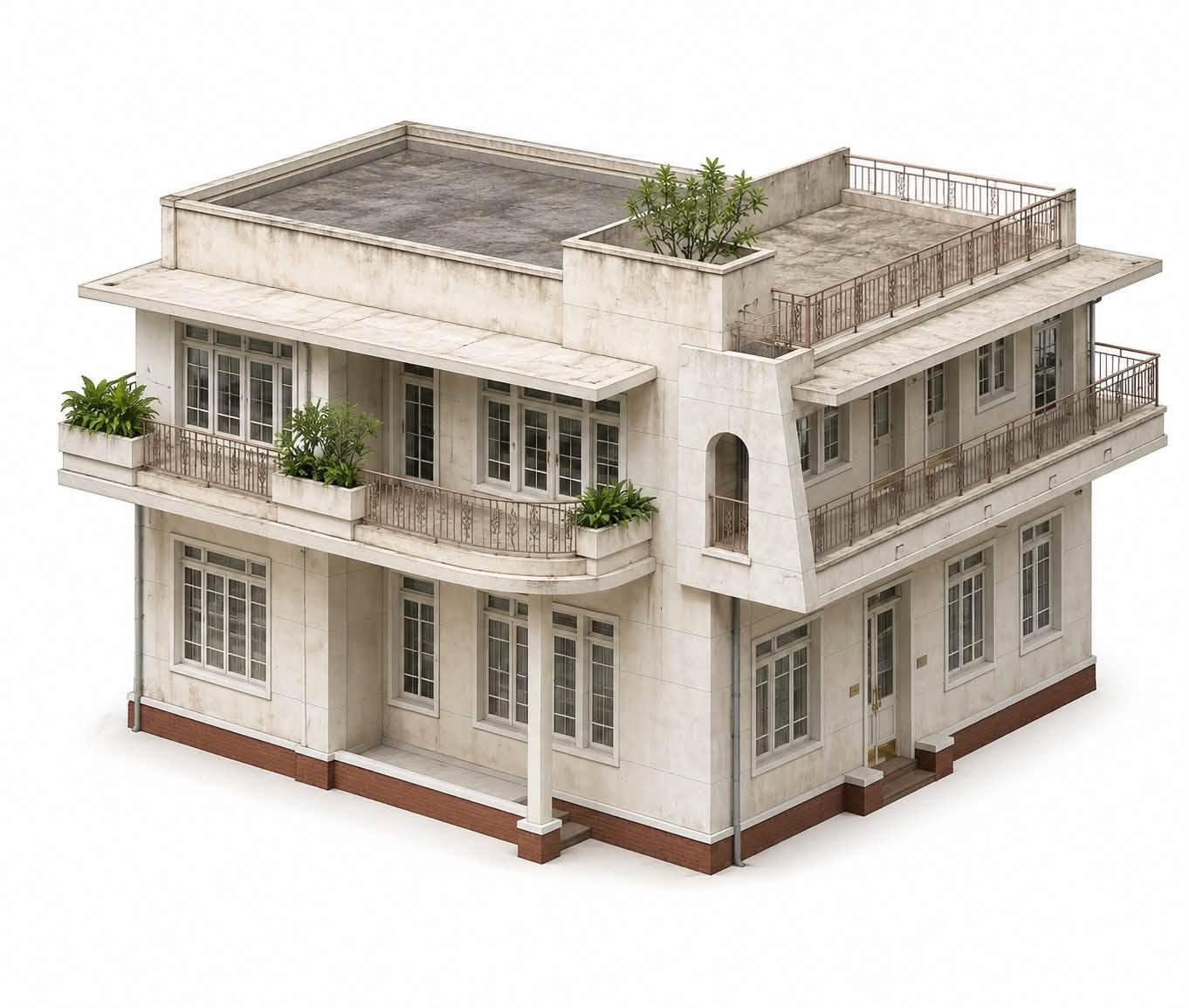
Unlike classical architecture, which is often defined by elaborate ornamentation, Modernist architecture emphasizes clean lines, geometric forms, and open spaces. Simple façades, expansive glass windows, spacious balconies, sun-shading concrete screens (brise-soleil), and reinforced concrete structures became its defining features. Every design element serves a practical purpose while enhancing natural ventilation, daylight, and the connection between indoor and outdoor spaces.
One of the most distinctive qualities of Vietnamese Modernist architecture is its successful adaptation to the country's tropical climate. Architects skillfully combined modern design principles with environmental responsiveness by incorporating wide corridors, deep overhangs, cross-ventilated windows, skylights, and concrete sun-breakers to minimize solar heat gain. As a result, these buildings remain naturally cool and well-lit, reducing dependence on mechanical air conditioning while providing comfortable living and working environments.
Many Modernist buildings in Vietnam also reflect a unique fusion of international architectural ideals and local cultural identity. While embracing the functional principles of modernism, architects integrated traditional Vietnamese elements such as internal courtyards, extended roof eaves, locally sourced materials, and spatial layouts suited to Vietnamese lifestyles. This thoughtful combination gave rise to a distinctly Vietnamese interpretation of Modernism; one that is both contemporary and deeply rooted in local traditions.
Today, numerous Modernist buildings remain iconic landmarks across Vietnam's cities. Government offices, schools, theaters, hotels, villas, and apartment buildings constructed during the mid-20th century continue to stand as important examples of architectural and cultural heritage. Despite the passage of decades, these structures are still admired for their balanced proportions, timeless aesthetics, sustainable design, and remarkable ability to respond to the tropical climate - qualities that remain highly relevant in contemporary architecture.
In recent years, Vietnamese Modernist architecture has attracted growing interest from architects, historians, conservationists, and design enthusiasts alike. More than a milestone in the nation's modernization, it represents an architectural philosophy that harmonizes functionality, climate-conscious design, and aesthetic simplicity. Preserving these buildings not only safeguards an important chapter of Vietnam's urban history but also provides valuable inspiration for the development of sustainable architecture in the future.
See more here
Modernist architecture first appeared in Vietnam in the early 20th century and flourished between the 1950s and 1975. Characterized by functionality, minimalist design, and adaptability to the local environment, this architectural movement reshaped the urban landscapes of major cities such as Hanoi, Hai Phong, Da Nang, Hue, and especially Ho Chi Minh City.
Unlike classical architecture, which is often defined by elaborate ornamentation, Modernist architecture emphasizes clean lines, geometric forms, and open spaces. Simple façades, expansive glass windows, spacious balconies, sun-shading concrete screens (brise-soleil), and reinforced concrete structures became its defining features. Every design element serves a practical purpose while enhancing natural ventilation, daylight, and the connection between indoor and outdoor spaces.
One of the most distinctive qualities of Vietnamese Modernist architecture is its successful adaptation to the country's tropical climate. Architects skillfully combined modern design principles with environmental responsiveness by incorporating wide corridors, deep overhangs, cross-ventilated windows, skylights, and concrete sun-breakers to minimize solar heat gain. As a result, these buildings remain naturally cool and well-lit, reducing dependence on mechanical air conditioning while providing comfortable living and working environments.
Many Modernist buildings in Vietnam also reflect a unique fusion of international architectural ideals and local cultural identity. While embracing the functional principles of modernism, architects integrated traditional Vietnamese elements such as internal courtyards, extended roof eaves, locally sourced materials, and spatial layouts suited to Vietnamese lifestyles. This thoughtful combination gave rise to a distinctly Vietnamese interpretation of Modernism; one that is both contemporary and deeply rooted in local traditions.
Today, numerous Modernist buildings remain iconic landmarks across Vietnam's cities. Government offices, schools, theaters, hotels, villas, and apartment buildings constructed during the mid-20th century continue to stand as important examples of architectural and cultural heritage. Despite the passage of decades, these structures are still admired for their balanced proportions, timeless aesthetics, sustainable design, and remarkable ability to respond to the tropical climate - qualities that remain highly relevant in contemporary architecture.
In recent years, Vietnamese Modernist architecture has attracted growing interest from architects, historians, conservationists, and design enthusiasts alike. More than a milestone in the nation's modernization, it represents an architectural philosophy that harmonizes functionality, climate-conscious design, and aesthetic simplicity. Preserving these buildings not only safeguards an important chapter of Vietnam's urban history but also provides valuable inspiration for the development of sustainable architecture in the future.
See more here