- Joined
- 20/7/24
- Bài viết
- 3,952
- Reaction score
- 0
- Points
- 36
Puaki - When Photography Becomes Evidence of Māori Cultural Memory
The project “Puaki” by Michael Bradley is a profound visual study of Māori culture, focusing on the traditional art of tā moko - permanent markings on the face and body of the Indigenous people of New Zealand. Inspired by nineteenth-century wet plate (collodion) photography, Bradley not only revives a historical technique but also uses its limitations as a critical tool to examine history, identity, and representation.
Michael Bradley, a photojournalist who has practiced wet plate photography since 2013, discovered an intriguing phenomenon during his research: tattoos often failed to appear clearly - or disappeared entirely - in wet plate images. This observation became the conceptual foundation for “Puaki,” a long-term project investigating the intersection between photographic technology and cultural visibility. From this starting point, Bradley delved deeper into the history of tā moko and its significance within Māori cultural identity.
According to Te Kōngahu Museum of Waitangi, Māori belief holds that every individual possesses a tā moko beneath the skin, waiting to be revealed. However, when the first photographs of tā moko were taken in the 1850s using wet plate techniques introduced by European settlers, the markings were barely visible. This photographic process, unintentionally, contributed to the visual “erasure” of a crucial cultural marker. Over time, this erasure extended beyond imagery into lived reality, as the practice of tā moko was increasingly suppressed during the assimilation of Māori people into colonial structures.
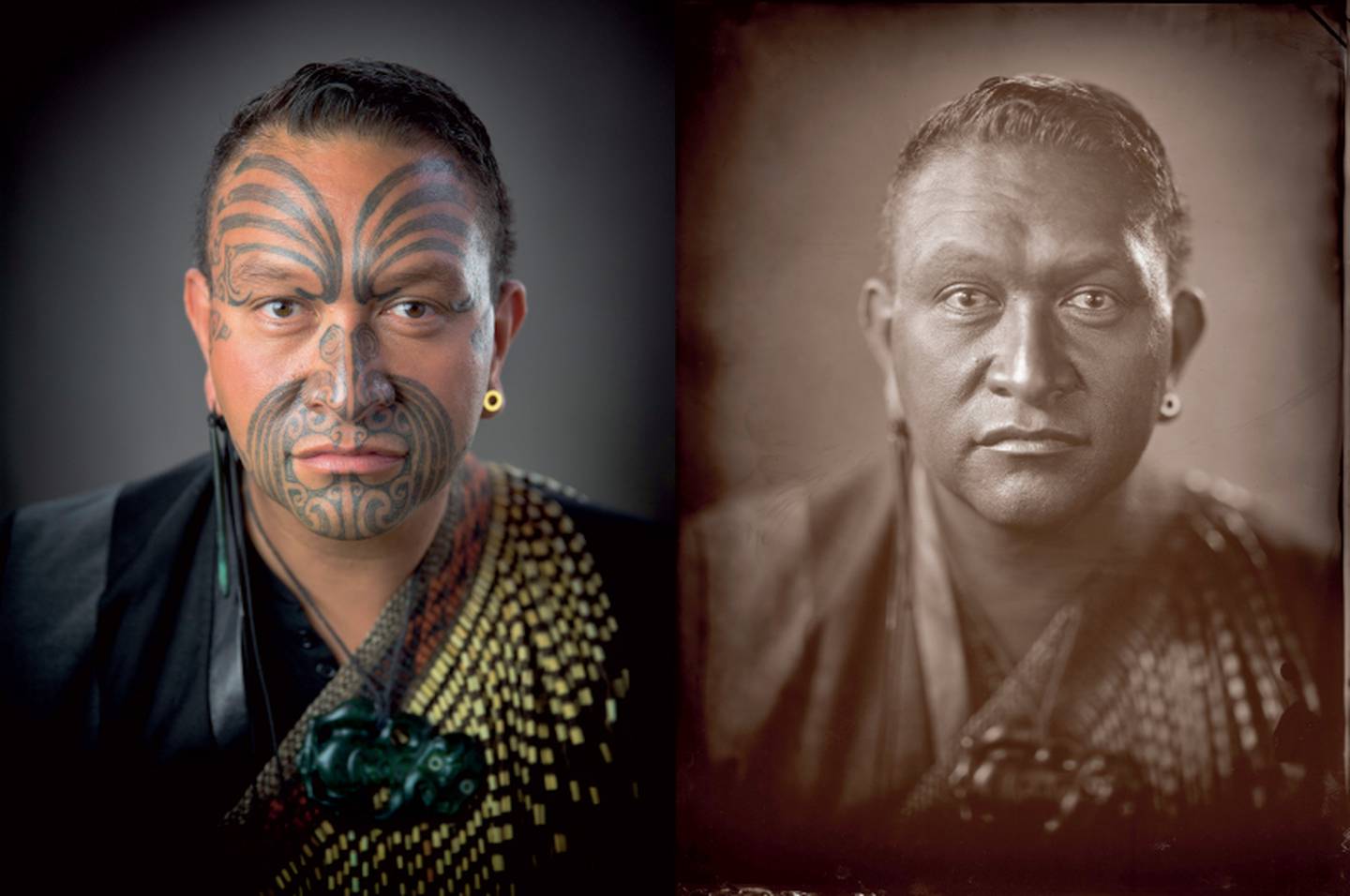
“Puaki” therefore operates not merely as a portrait series but as a dialogue between past and present. Bradley photographs the same subjects using both modern digital methods and historical wet plate processes, creating a striking visual comparison. While digital images clearly reveal the intricate patterns of tā moko, wet plate photographs obscure or erase them. This contrast raises a critical question: can photography - often perceived as an objective recording tool - also participate in the erasure of cultural identity?
Since the 1990s, tā moko has experienced a significant resurgence, becoming a powerful symbol of both personal and collective identity. In Bradley’s portraits, this revival is evident in the dignity, pride, and presence of his subjects. Each marking is not merely an act of personal expression but a cultural statement carried on the body with honor and meaning.
The title “Puaki,” which in Māori means “to come forth, emerge, reveal, or bear witness,” directly reflects the project’s conceptual intent. Bradley aims to “plant a seed” in the public consciousness, encouraging deeper engagement with tā moko and a broader understanding of how Māori culture remains integral to contemporary society. Once nearly erased from historical narratives, the tradition now stands as a testament to the resilience and continuity of cultural practices in the modern world.
Through “Puaki,” Michael Bradley transforms photography into a reflective medium - one that not only documents reality but also interrogates how reality is constructed, perceived, and preserved. The project thus contributes significantly to ongoing discussions about memory, visual power, and the endurance of cultural identity in postcolonial contexts.
See more here
The project “Puaki” by Michael Bradley is a profound visual study of Māori culture, focusing on the traditional art of tā moko - permanent markings on the face and body of the Indigenous people of New Zealand. Inspired by nineteenth-century wet plate (collodion) photography, Bradley not only revives a historical technique but also uses its limitations as a critical tool to examine history, identity, and representation.
Michael Bradley, a photojournalist who has practiced wet plate photography since 2013, discovered an intriguing phenomenon during his research: tattoos often failed to appear clearly - or disappeared entirely - in wet plate images. This observation became the conceptual foundation for “Puaki,” a long-term project investigating the intersection between photographic technology and cultural visibility. From this starting point, Bradley delved deeper into the history of tā moko and its significance within Māori cultural identity.
According to Te Kōngahu Museum of Waitangi, Māori belief holds that every individual possesses a tā moko beneath the skin, waiting to be revealed. However, when the first photographs of tā moko were taken in the 1850s using wet plate techniques introduced by European settlers, the markings were barely visible. This photographic process, unintentionally, contributed to the visual “erasure” of a crucial cultural marker. Over time, this erasure extended beyond imagery into lived reality, as the practice of tā moko was increasingly suppressed during the assimilation of Māori people into colonial structures.
“Puaki” therefore operates not merely as a portrait series but as a dialogue between past and present. Bradley photographs the same subjects using both modern digital methods and historical wet plate processes, creating a striking visual comparison. While digital images clearly reveal the intricate patterns of tā moko, wet plate photographs obscure or erase them. This contrast raises a critical question: can photography - often perceived as an objective recording tool - also participate in the erasure of cultural identity?
Since the 1990s, tā moko has experienced a significant resurgence, becoming a powerful symbol of both personal and collective identity. In Bradley’s portraits, this revival is evident in the dignity, pride, and presence of his subjects. Each marking is not merely an act of personal expression but a cultural statement carried on the body with honor and meaning.
The title “Puaki,” which in Māori means “to come forth, emerge, reveal, or bear witness,” directly reflects the project’s conceptual intent. Bradley aims to “plant a seed” in the public consciousness, encouraging deeper engagement with tā moko and a broader understanding of how Māori culture remains integral to contemporary society. Once nearly erased from historical narratives, the tradition now stands as a testament to the resilience and continuity of cultural practices in the modern world.
Through “Puaki,” Michael Bradley transforms photography into a reflective medium - one that not only documents reality but also interrogates how reality is constructed, perceived, and preserved. The project thus contributes significantly to ongoing discussions about memory, visual power, and the endurance of cultural identity in postcolonial contexts.
See more here