- Joined
- 20/7/24
- Bài viết
- 3,876
- Reaction score
- 0
- Points
- 36
Utagawa Kuniyoshi – Master of Ukiyo-e and Visual Storytelling
Utagawa Kuniyoshi (1798–1861) was one of the most remarkable artists of the Ukiyo-e tradition during the late Edo period. He was born in Edo (modern-day Tokyo) and trained under the renowned master Utagawa Toyokuni, leader of the influential Utagawa school.
Kuniyoshi’s early career was marked by hardship, but he achieved a major breakthrough in the 1820s with his illustrations of the Chinese classic Suikoden (Water Margin). His dynamic depictions of heroic warriors, intricate tattoos, and dramatic compositions quickly established his reputation as a leading artist of his time.
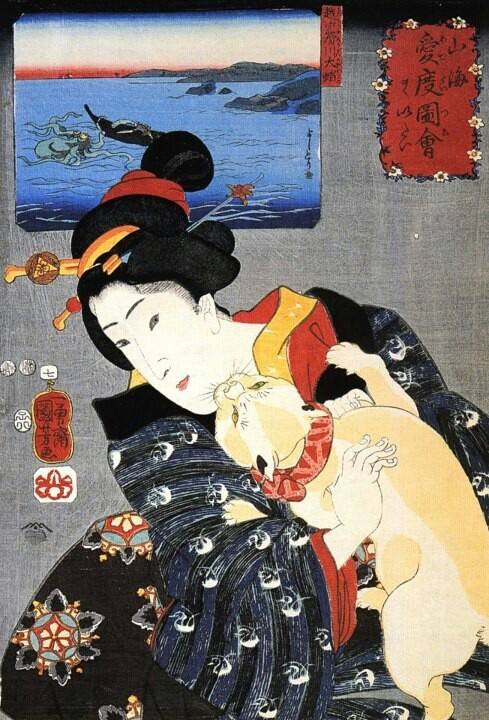
The artistic style of Utagawa Kuniyoshi is distinguished by its diversity and imaginative power. Beyond samurai and historical heroes, he created works featuring mythical creatures, ghosts, animals - especially cats - and scenes infused with satire and humor. He was particularly skilled at constructing complex, multi-figure compositions filled with motion and energy, pushing the visual boundaries of woodblock printing.
A defining aspect of Kuniyoshi’s work is his extraordinary imagination. He often blended reality with fantasy, producing striking images such as warriors battling giant monsters or skeletons emerging from the darkness. At the same time, he brought a playful and human dimension into ukiyo-e through everyday subjects and witty visual inventions, with his cat illustrations becoming especially beloved.
Throughout his career, Utagawa Kuniyoshi trained many students and had a lasting influence on later artists, including Tsukioka Yoshitoshi. He also faced strict censorship under the Edo government, particularly when his works contained political satire or allegorical criticism.
Kuniyoshi died in 1861, leaving behind a rich and innovative artistic legacy. Today, he is regarded as one of the last great masters of ukiyo-e, an artist who expanded the expressive possibilities of the medium through technical mastery, imagination, and powerful visual storytelling. His works not only reflect the culture of Edo-period Japan but also continue to inspire modern art forms, from manga to contemporary design.
See more here
Utagawa Kuniyoshi (1798–1861) was one of the most remarkable artists of the Ukiyo-e tradition during the late Edo period. He was born in Edo (modern-day Tokyo) and trained under the renowned master Utagawa Toyokuni, leader of the influential Utagawa school.
Kuniyoshi’s early career was marked by hardship, but he achieved a major breakthrough in the 1820s with his illustrations of the Chinese classic Suikoden (Water Margin). His dynamic depictions of heroic warriors, intricate tattoos, and dramatic compositions quickly established his reputation as a leading artist of his time.
The artistic style of Utagawa Kuniyoshi is distinguished by its diversity and imaginative power. Beyond samurai and historical heroes, he created works featuring mythical creatures, ghosts, animals - especially cats - and scenes infused with satire and humor. He was particularly skilled at constructing complex, multi-figure compositions filled with motion and energy, pushing the visual boundaries of woodblock printing.
A defining aspect of Kuniyoshi’s work is his extraordinary imagination. He often blended reality with fantasy, producing striking images such as warriors battling giant monsters or skeletons emerging from the darkness. At the same time, he brought a playful and human dimension into ukiyo-e through everyday subjects and witty visual inventions, with his cat illustrations becoming especially beloved.
Throughout his career, Utagawa Kuniyoshi trained many students and had a lasting influence on later artists, including Tsukioka Yoshitoshi. He also faced strict censorship under the Edo government, particularly when his works contained political satire or allegorical criticism.
Kuniyoshi died in 1861, leaving behind a rich and innovative artistic legacy. Today, he is regarded as one of the last great masters of ukiyo-e, an artist who expanded the expressive possibilities of the medium through technical mastery, imagination, and powerful visual storytelling. His works not only reflect the culture of Edo-period Japan but also continue to inspire modern art forms, from manga to contemporary design.
See more here